What a flat lay shows, and what it leaves out
A flat lay is the most honest photo of a garment: color, print, construction and every button are right there, with nothing hidden behind a pose. That honesty makes flat lays good source photos for AI. They are also the easiest product photos to take, which is why so many brands already have them.
What a flat lay can't show is the body. Laid flat, a garment has no length relative to a person, no drape and no fit. AI fills those gaps by guessing, and the guesses land exactly where shoppers look:
- Length. You can see the hem, but not where it lands. Above the knee or mid-calf depends on the garment's measurements and the model's size.
- Sleeves. A full-length sleeve and a bracelet-length sleeve look almost the same lying flat.
- Drape. On a table, silk satin, cotton poplin and heavy twill all lie flat. On a body, one pools, one stands away, one holds a crease.
- Fit. An oversized shirt and a fitted one can have the same outline on the floor. How much room there is between the garment and the body is invisible.
- Waist and rise. Where skirts and trousers sit on the body.
- The back. If the back was never photographed, there is nothing to work from.
The photo alone is not enough, so the rest has to come from you. That is what the brief below is for.
What to send
| Send | Why we need it |
|---|---|
| Flat lay photos, front and back, with the whole garment in frame, ideally 2,000 px or more on the long side | Color, print and construction come from these. A sharp phone photo in daylight works. |
| Close-ups of print, fabric texture, labels and hardware (optional) | They feed the two detail frames. |
| Your size chart, plus the size shown in the photo | Length and fit can't be read from a flat lay. Garment measurements tell us where the hem and sleeves land. |
| The fabric type: composition and weight, such as "100% silk satin" or "12 oz denim" | Drape and stretch come from the fabric, not from the photo. |
| 1–3 reference images of the look you want | Mood, styling and setting for the lifestyle frame. |
No samples to ship: everything comes from photos.
A few habits make a flat lay easier to read. Steam the garment, shoot straight down rather than at an angle, avoid hard shadows and leave some space around the edges. Don't tuck sleeves under or pin the garment into a shape it doesn't have, because whatever is in the photo is what gets rendered. For a full checklist, see how to photograph clothing for ecommerce.
How we get length, drape and fit right
This is the part a flat lay can't do on its own. Before anything is generated, we turn your size chart and fabric notes into fit points for the model:
- Hem and sleeve length: where each one lands, worked out from the garment measurements and the size the model wears.
- Fit: fitted, regular or oversized, and how much room there is at the chest, waist and hips.
- Drape: how the fabric should fall, from its type and weight.
- Waist and rise: for skirts and trousers.
If your size chart and photos disagree, or a fit point isn't clear, we ask you before we start. A person then compares every finished frame with your flat lay and those notes: length, drape, fit, color, print and logo, construction, and hands, pose and skin. A frame that misses is redone before it reaches you. You approve the direction on 2–4 images before we make the full set, and after delivery you get two free revision rounds within 10 days.
What you get
Each product becomes one photoshoot: seven connected images on one model. Pilots use a model from our roster; on a retainer, your brand model is cast for your buyer (gender, age, body type and mood) and stays the same across your whole catalog.
- Cover: the lead image of the set.
- Full length and back: fit and length from both sides.
- Lifestyle: the piece worn in a real-looking setting.
- Movement: how the fabric falls when the model walks or turns.
- Two detail frames: print, texture, neckline or hardware up close.
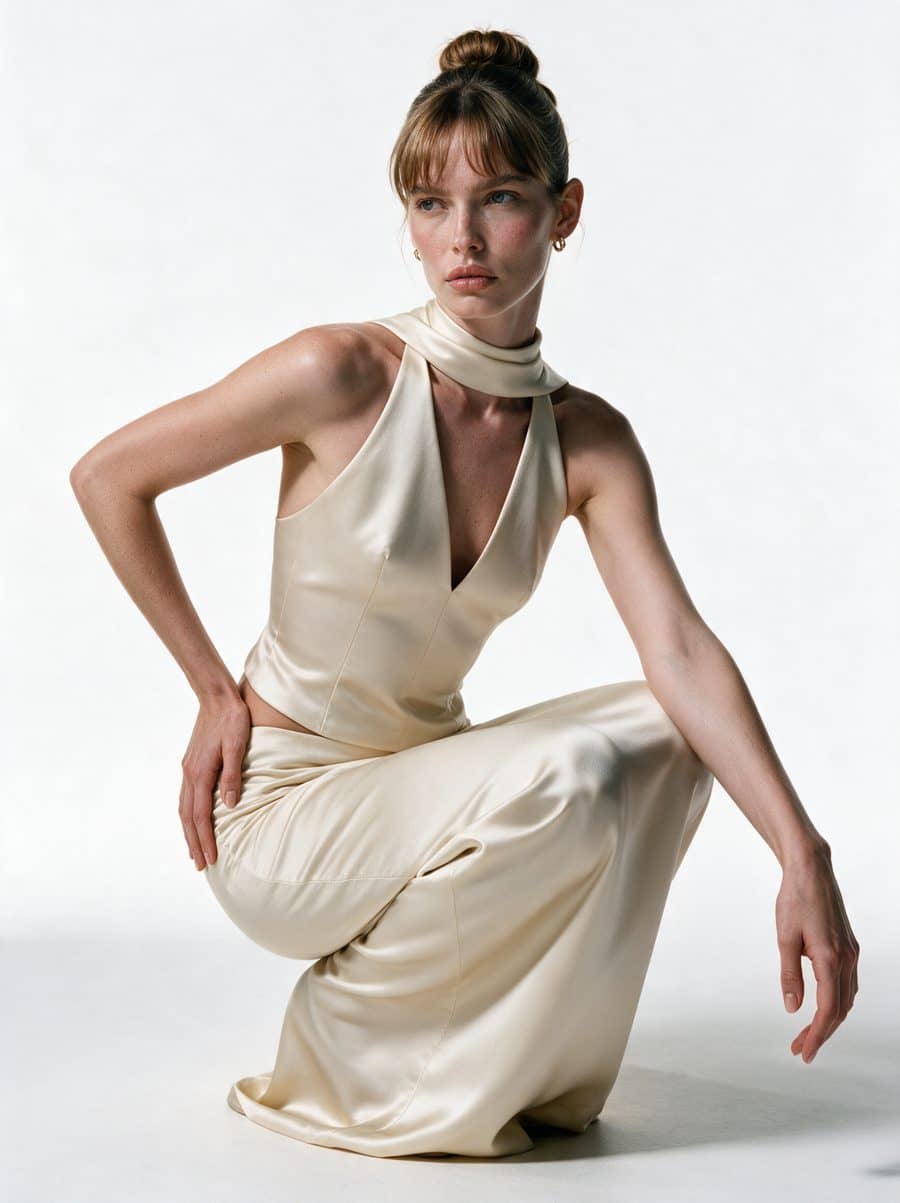
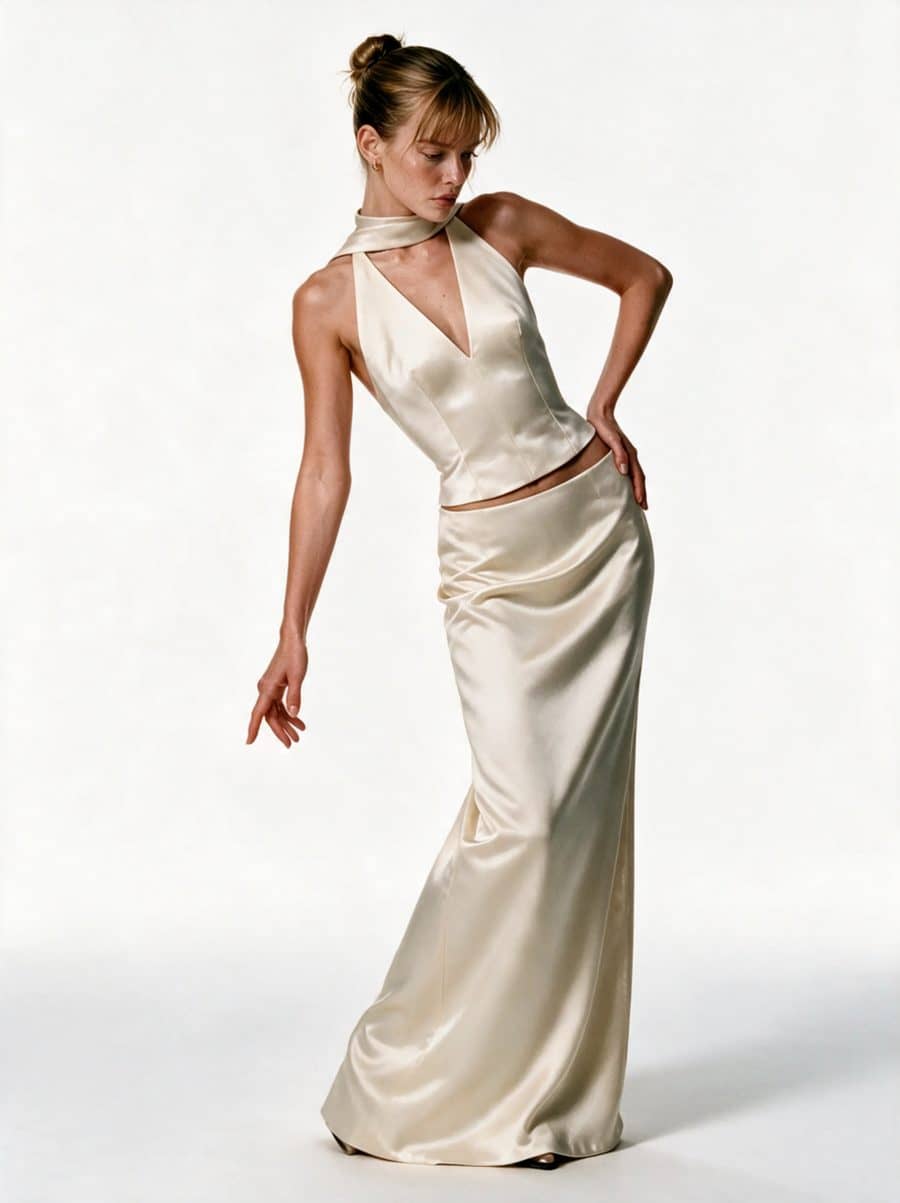
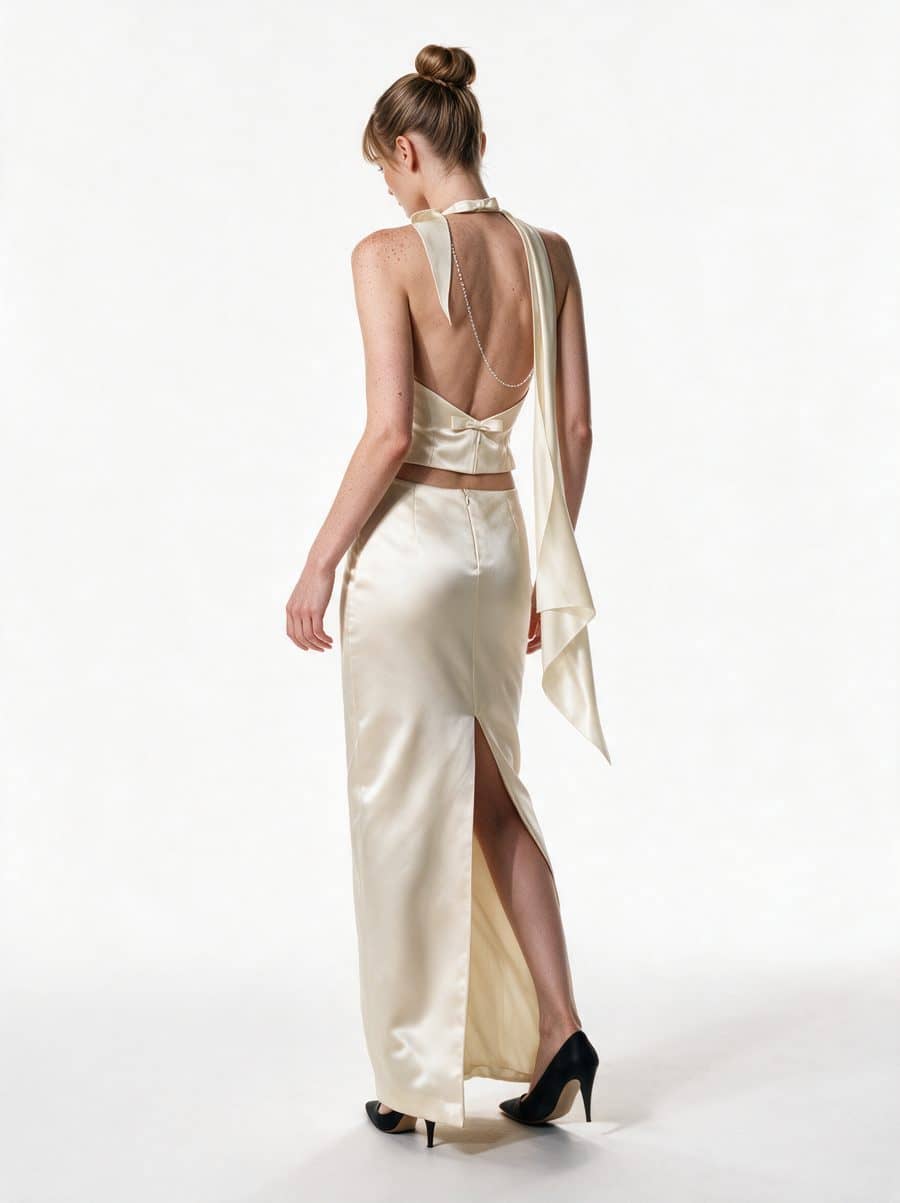
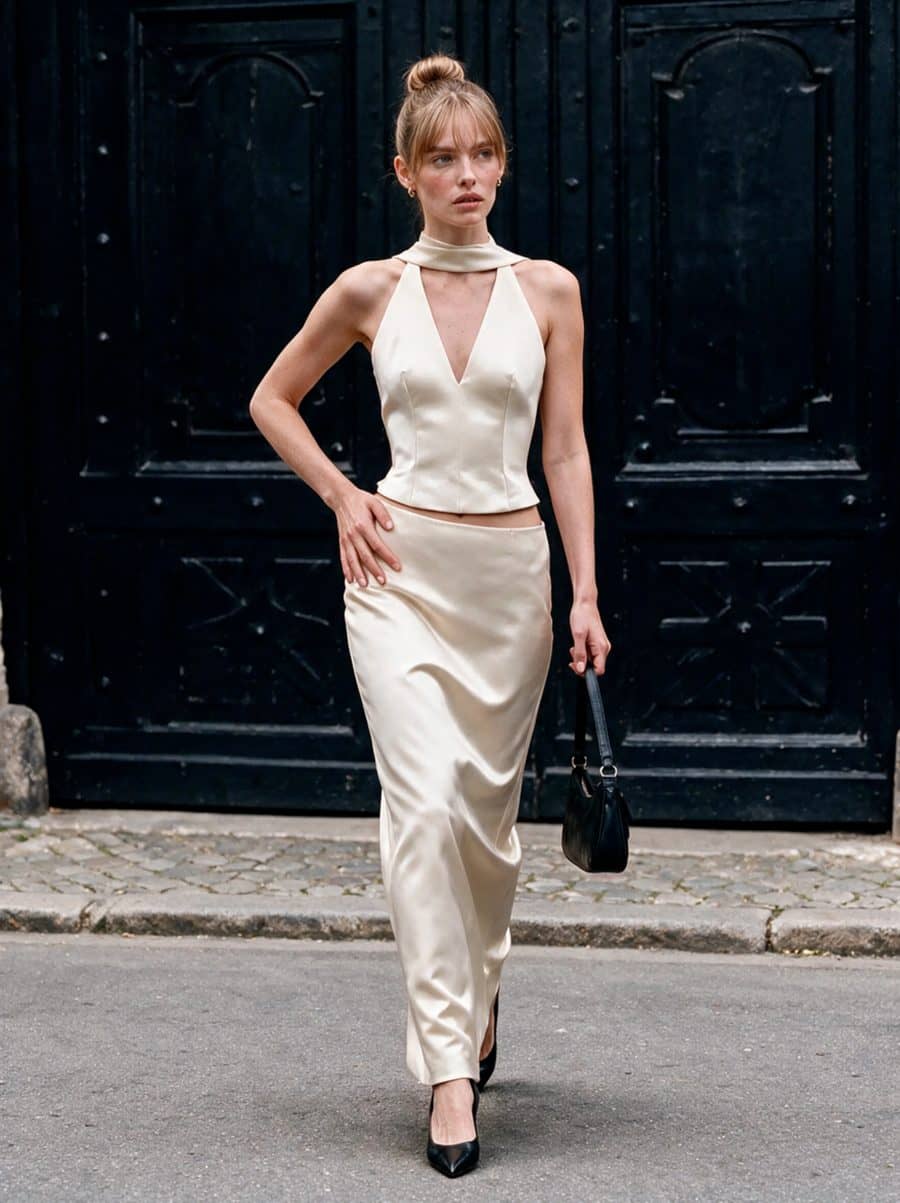
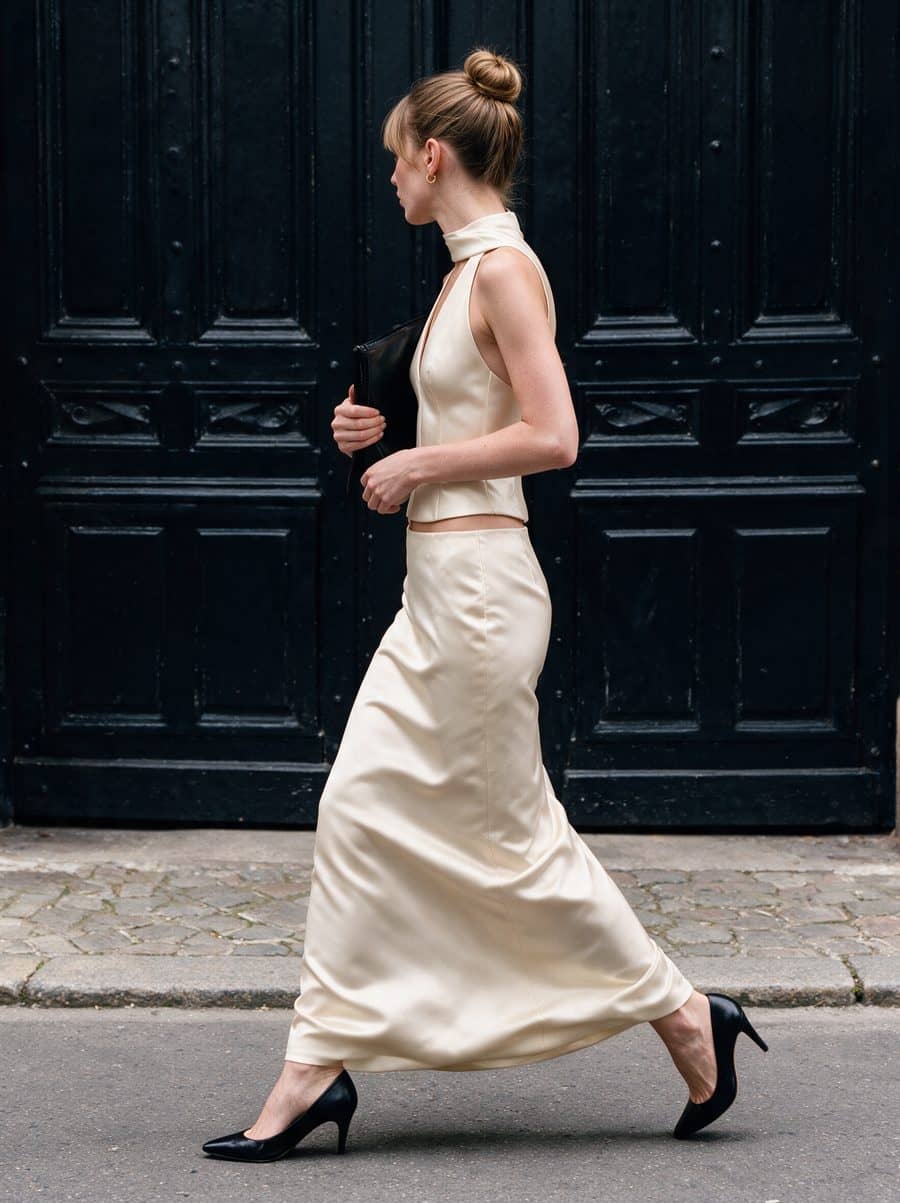
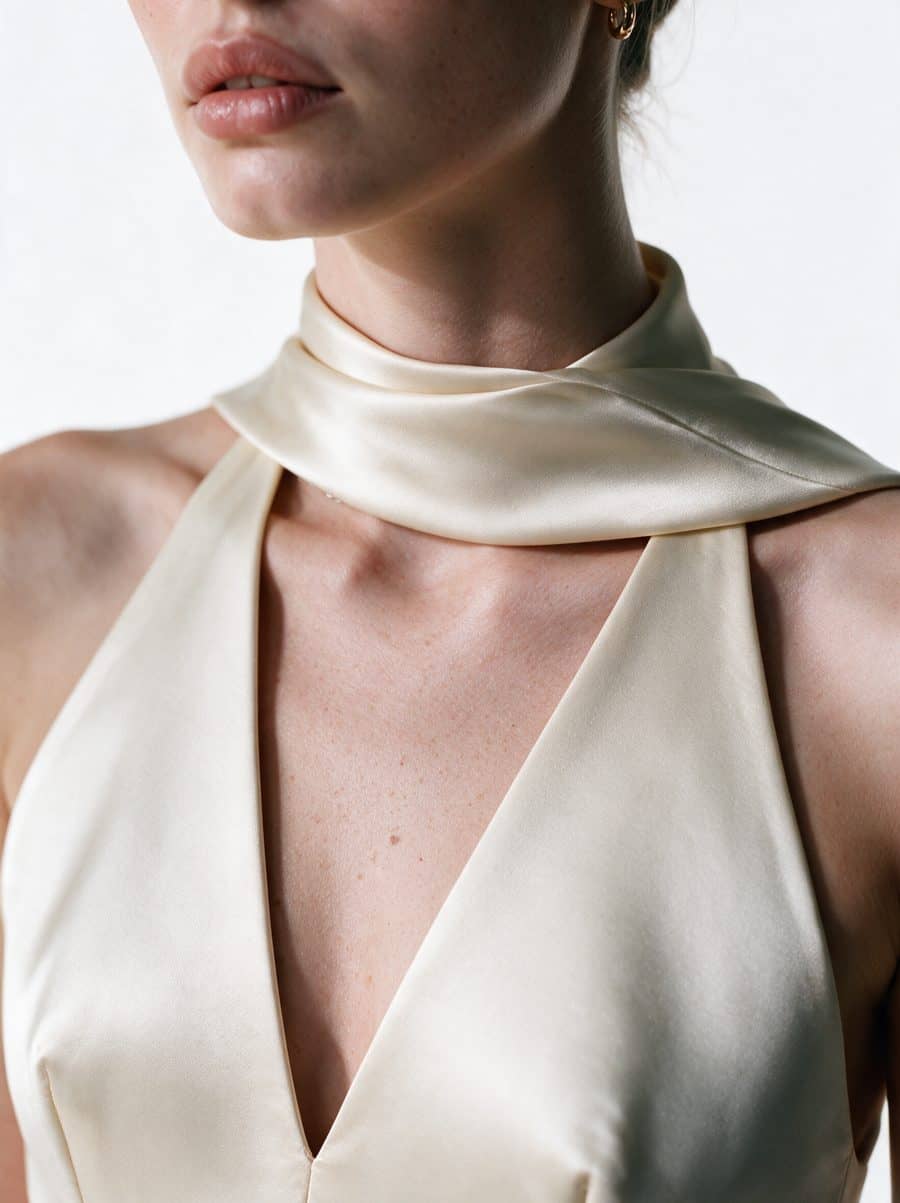
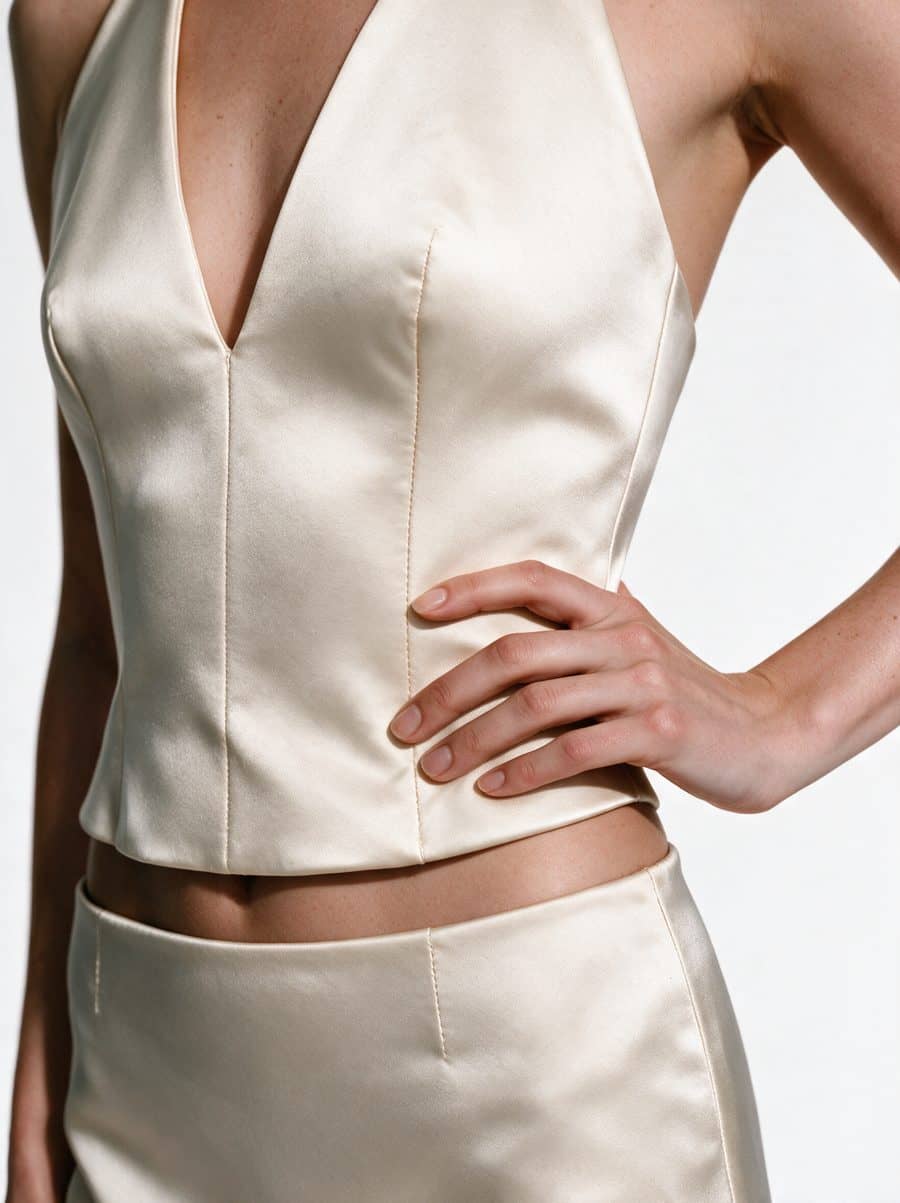
Studio images on a model start from $95 each, with no minimum order; lifestyle images and campaigns are quoted in your proposal. You can start with a pilot of 5 products × 7 images, credited in full to your first retainer month. The first batch is ready within 10 business days, and once you've paid in full, you get an exclusive, perpetual license to every image. More on how the frames work together: inside a 7-image photoshoot.
Done for you, not a tool
You send your photos, size chart, fabric notes and references. A person on our side checks fit, length and color on every image before you see it, and one model carries the whole set — on a retainer, your own brand model across the catalog. Your first batch is ready within 10 business days, then each drop of up to 10 products within 5–6 business days.
A physical shoot is still the better choice for video, or for a piece that has to be seen on a real person in motion. For catalog images, it means shipping samples and paying for studio time, even though you already have photos of every garment. The trade-offs are covered in AI photo tools vs done-for-you and flat lay vs ghost mannequin vs on-model.
Where flat lays fall short
- A photo we can't read. If a flat lay is too small, too dark or too blurry to show the fabric, we tell you what to reshoot, and a phone next to a window is usually enough.
- Pieces at the edge of what AI renders well. Highly reflective fine jewelry, complex layered outfits where garments interact closely, and extreme close-ups of fine lace are weak spots. If your product is one of them, we tell you before we quote.
- New flat lays. We don't shoot them: Sellora works remotely and has no physical studio. If you don't have flat lays yet, sharp phone photos on a hanger work too, as long as the fabric, color and details are clearly visible. If you already have flat lays, they are all we need.
If you have ghost mannequin shots instead, they carry more of the garment's shape. See ghost mannequin to on-model.
Pick one product you sell from a flat lay. Send us a brief with its photos and size chart, or book a call, and we'll show you what its 7-image set would include.