The short answer
A 7-image photoshoot is one product, on one model, in one styling, delivered as seven connected frames: a cover, a full-length view, the back, a lifestyle frame, a movement frame and two detail frames. Each frame answers a different question a buyer has before adding to cart. Below are two real sets from our portfolio, frame by frame: what each image is for and what we check in it.
Why seven frames
Amazon's clothing style guide says that, based on tests with customers, it recommends 5 to 7 images per listing: at least a clear front and back and details from all angles, plus, if you like, a styled shot that shows how the product can be worn. Seven frames cover all of that, with one job per image:
| Frame | The buyer's question |
|---|---|
| Cover | What is it, and do I want it? |
| Full length | How does it fit, and how long is it? |
| Back | What does the back look like? |
| Lifestyle | How would I wear it? |
| Movement | How does the fabric move and fall? |
| Detail one | What does the fabric or construction look like up close? |
| Detail two | What about the neckline, print, hardware or trim? |
The order matters too. The cover earns the click, the full length and back answer fit, the lifestyle and movement frames sell the feeling, and the details answer the doubts that come right before buying.
Set one: satin halter top and maxi skirt
From our portfolio, all seven frames of one photoshoot:
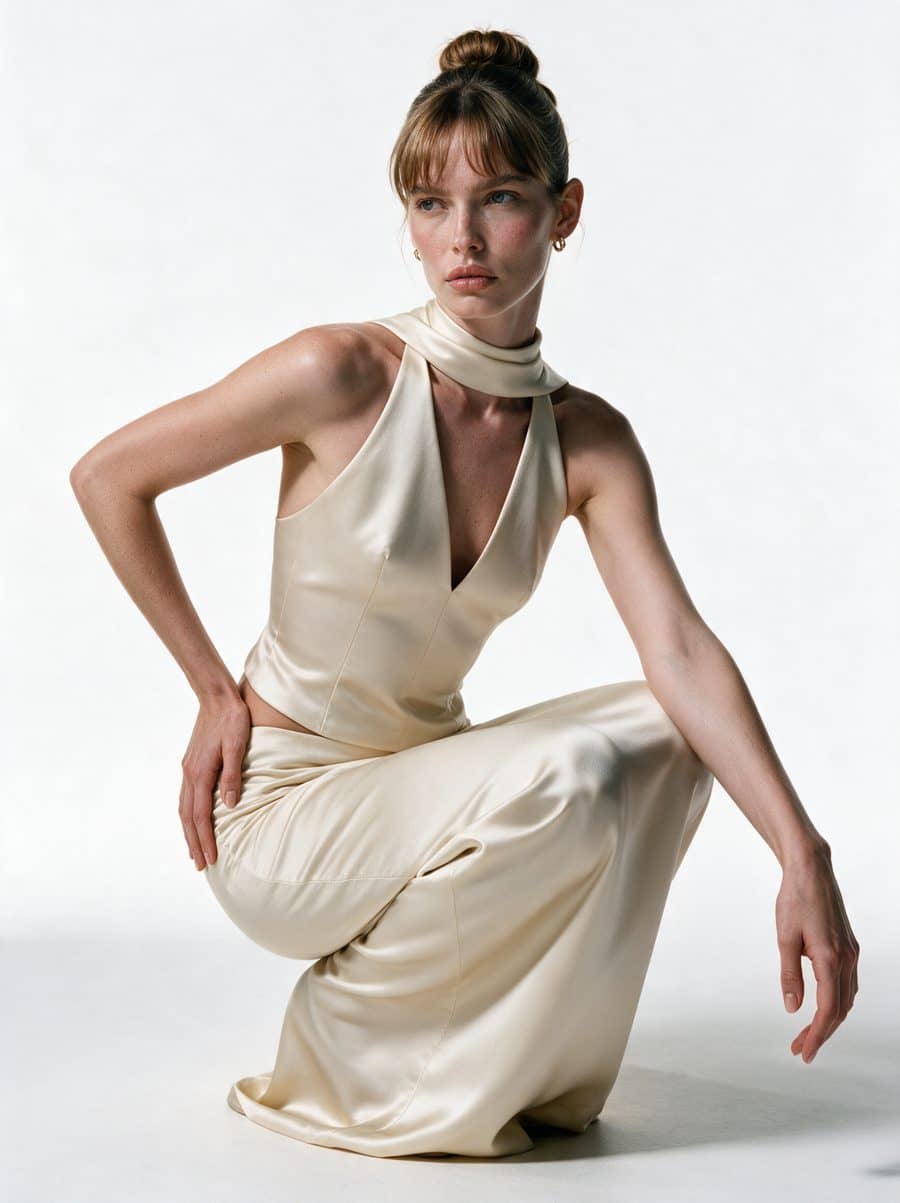
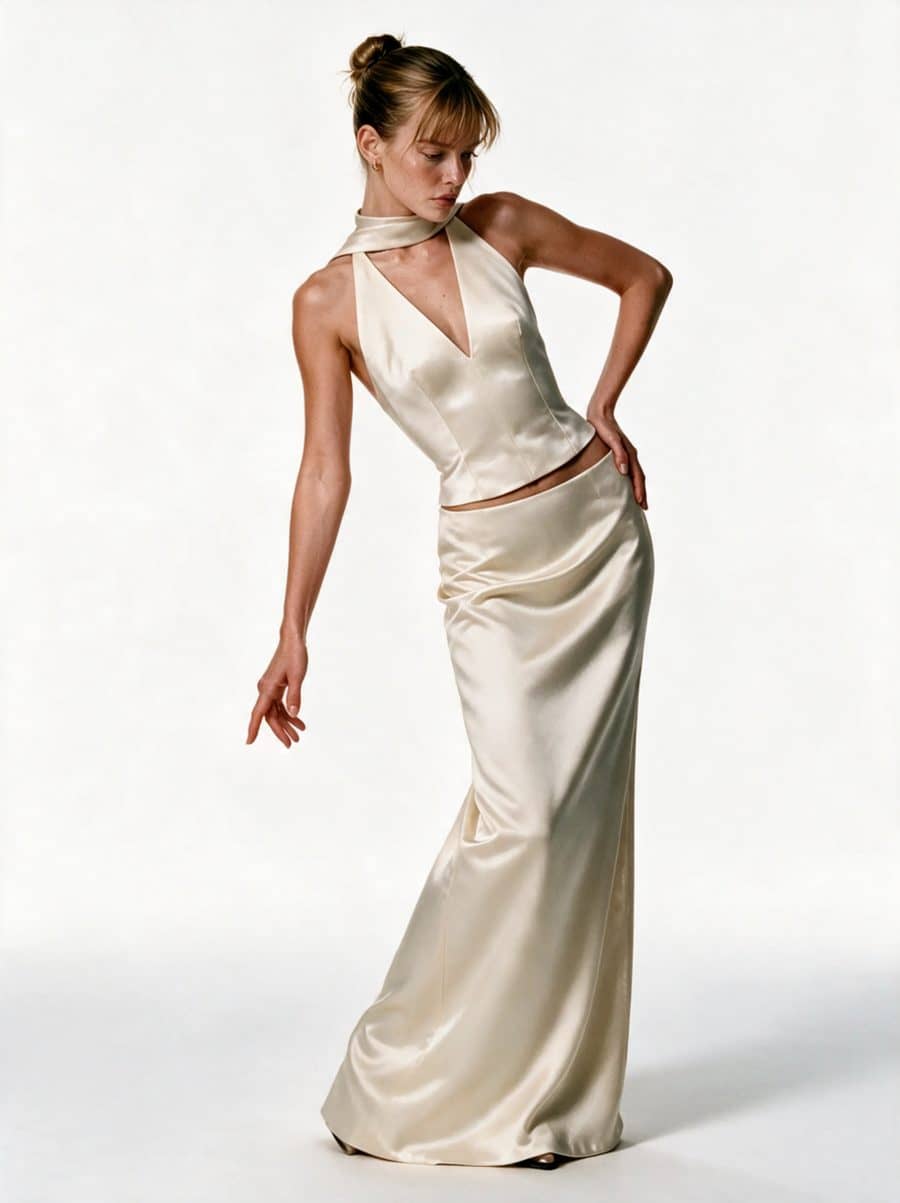
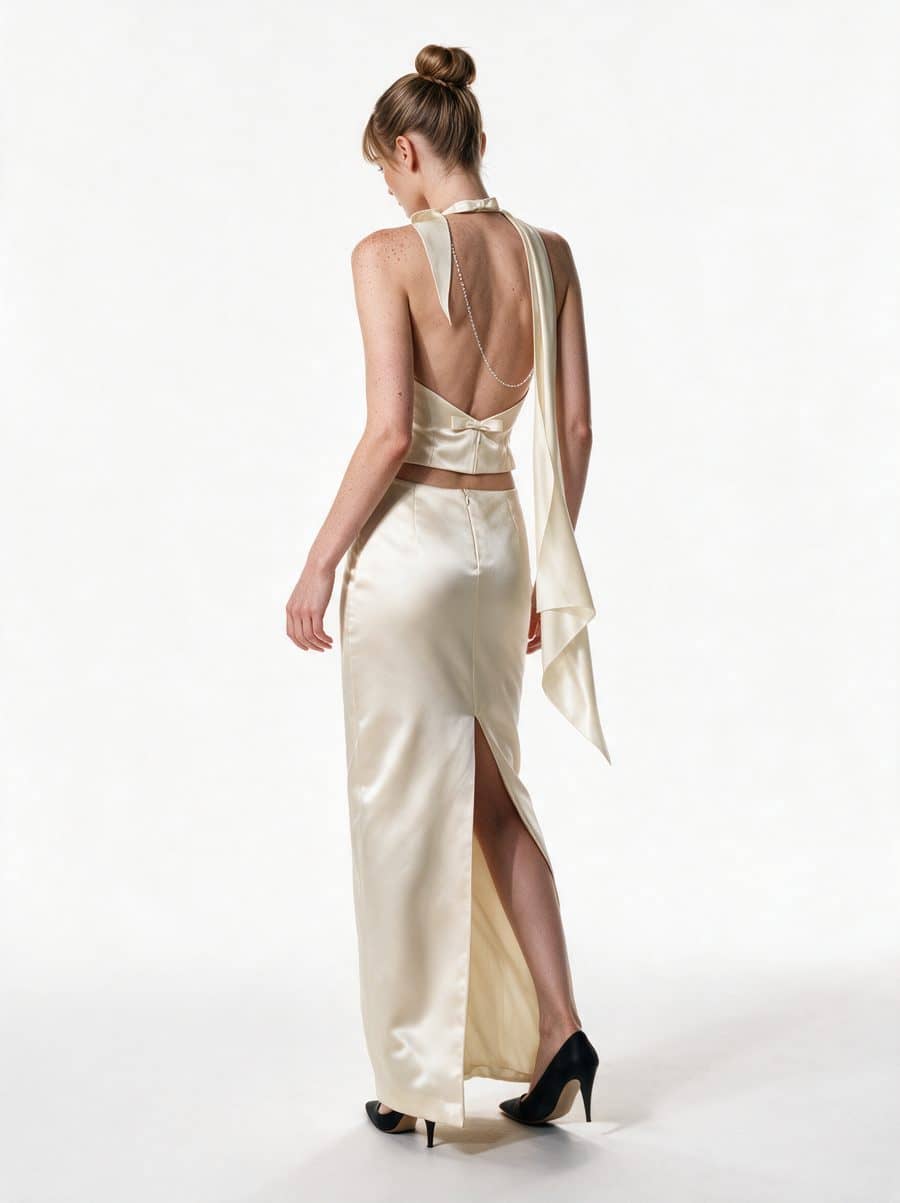
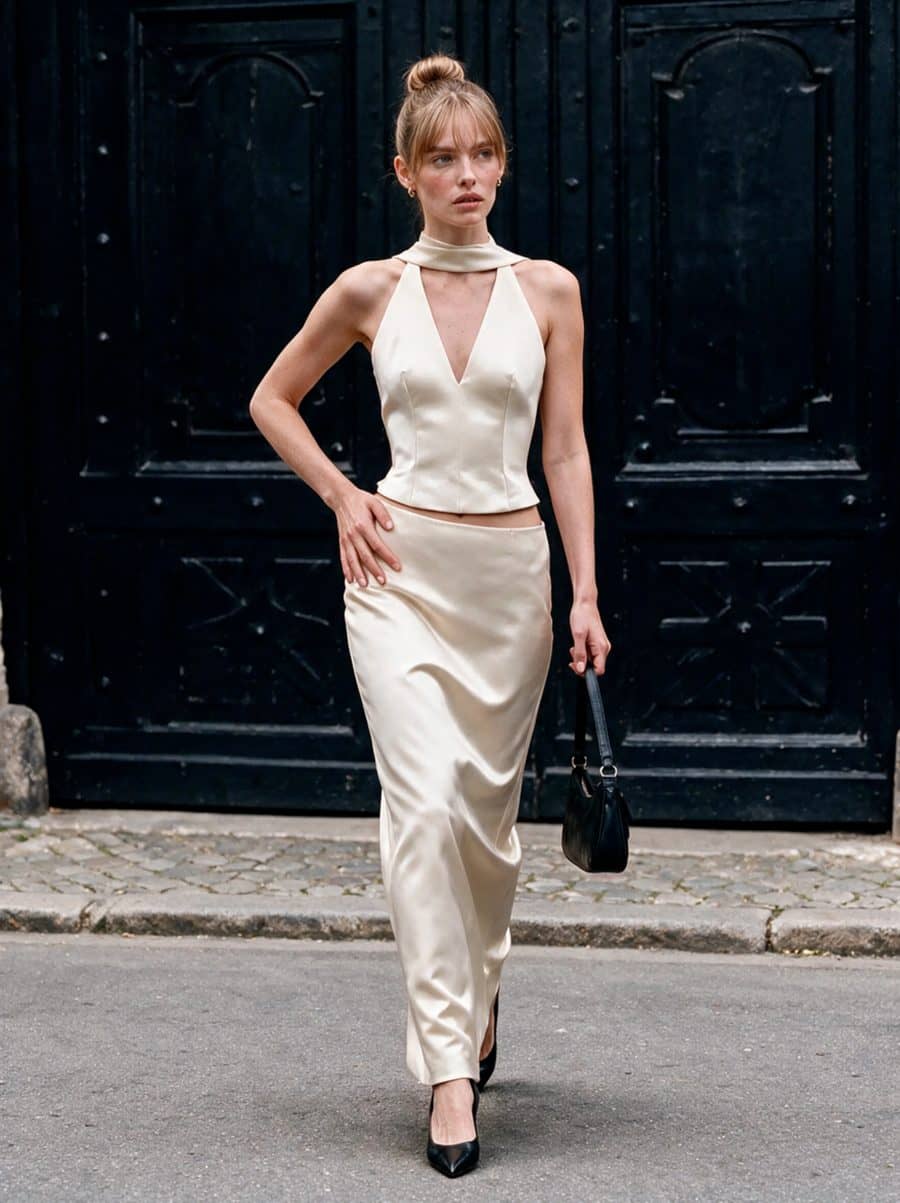
1. Cover
What it does. This is the first image a shopper sees in a feed or on your store: a crouched studio pose on white, with the satin catching the light. Its job is to stop the scroll.
What we check. The ivory of the satin, neither yellow nor gray. The shape of the scarf neck and the V. The seams on the bodice. Hands with the right number of fingers and natural nails. A skirt that folds softly on the floor the way satin does.
This pose suits a brand site, Etsy or social. Amazon's clothing guide doesn't allow a kneeling or sitting model in the main image, so on Amazon the main comes from a standing frame like the next one.
2. Full length
What it does. The fit frame. Standing, head to hem, on white: where the top ends, the gap at the waist, how the skirt sits on the hips and where the hem lands.
What we check. Length against your size chart, because a maxi that turns into a midi on the model can lead to returns. The cropped length of the top matches the real garment. The skirt drapes like satin, close to the body without clinging.
For Amazon, the main image is a standing frame like this on pure white, cropped the way Amazon's guide sets for long garments: the top of the frame between the nose and upper lip, the bottom below the feet.
3. Back
What it does. Shows what the front views can't: the open back, the halter scarf falling down the back, the small bow at the back of the bodice, and the center seam and slit of the skirt.
What we check. That every back detail matches your source photos (tie length, bow placement, seams, slit height) and that nothing was invented to fill the space.
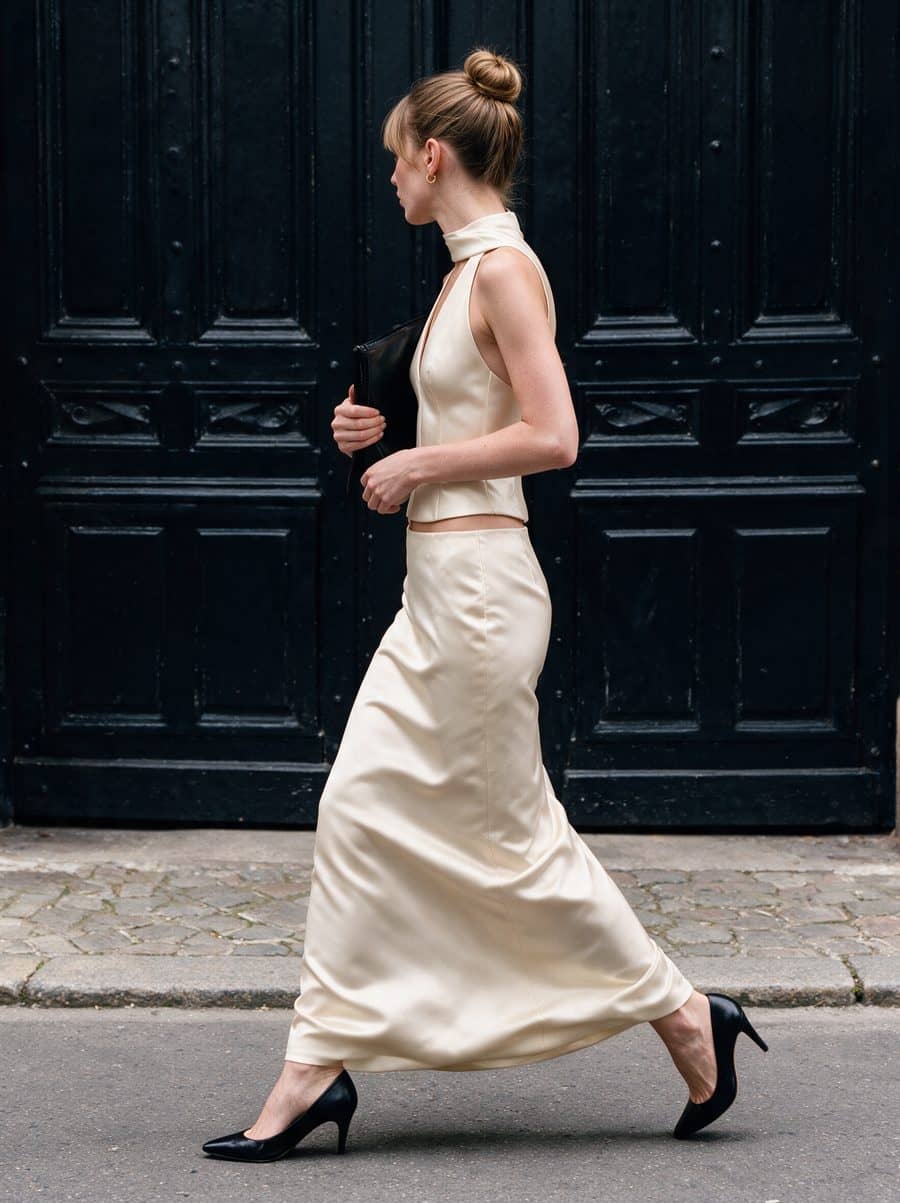
4. Street look
What it does. The lifestyle frame. The same outfit on a street, in front of a black door, styled with a black bag and pumps. It shows how the piece is worn in real life and gives a sense of scale.
What we check. The satin is the same ivory outdoors as in the studio. The light on the fabric matches the scene. The styling doesn't cover the product.
5. On the move
What it does. Shows how the fabric moves: the skirt swinging mid-stride, and the halter from the side.
What we check. The fabric behaves like its weight. Satin should swing and fold, not float like chiffon or stand stiff like taffeta. The hem and slit behave the way the back view shows them.
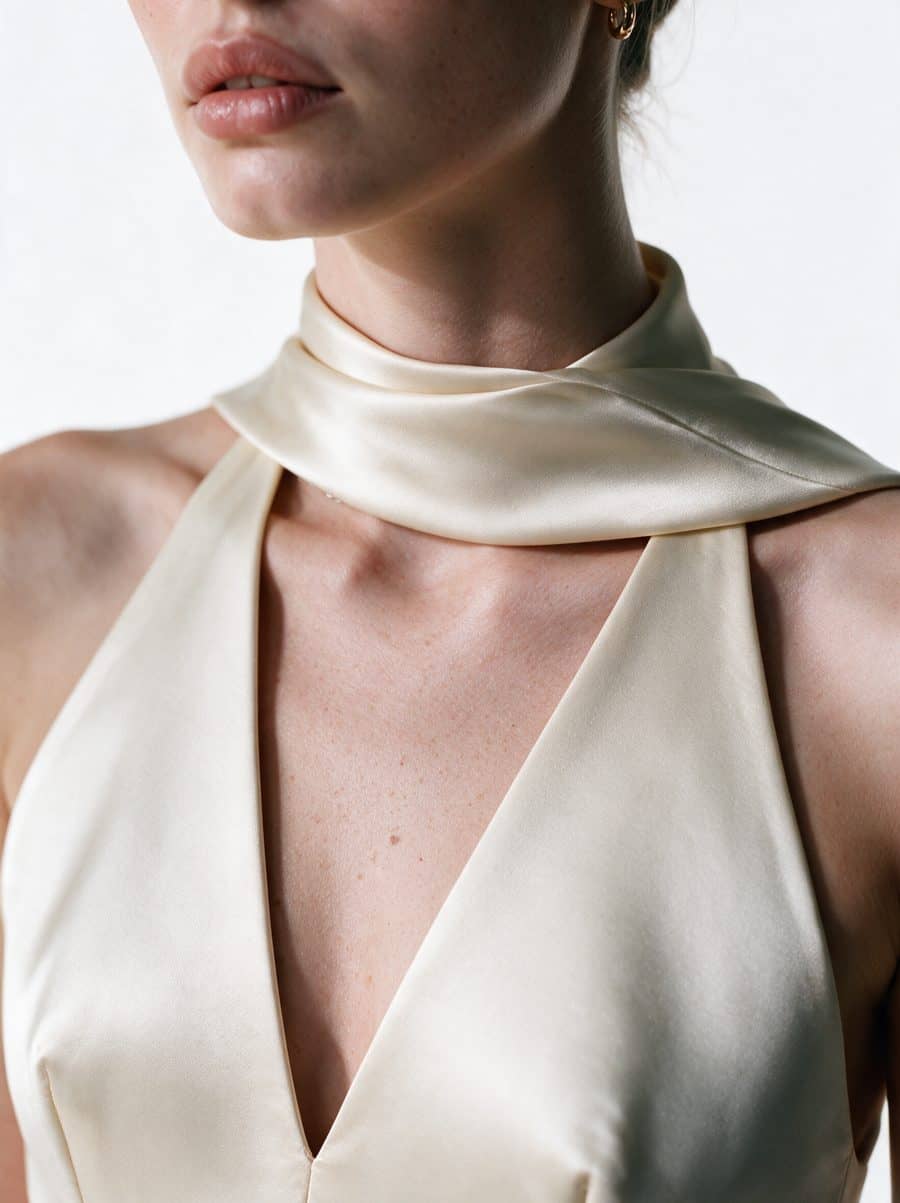
6. Neckline
What it does. A close-up of the scarf collar: how it wraps, how the satin shines, how the edges are finished.
What we check. The folds and seam at the neck match the garment, the sheen looks like satin rather than plastic, and the skin texture looks real.
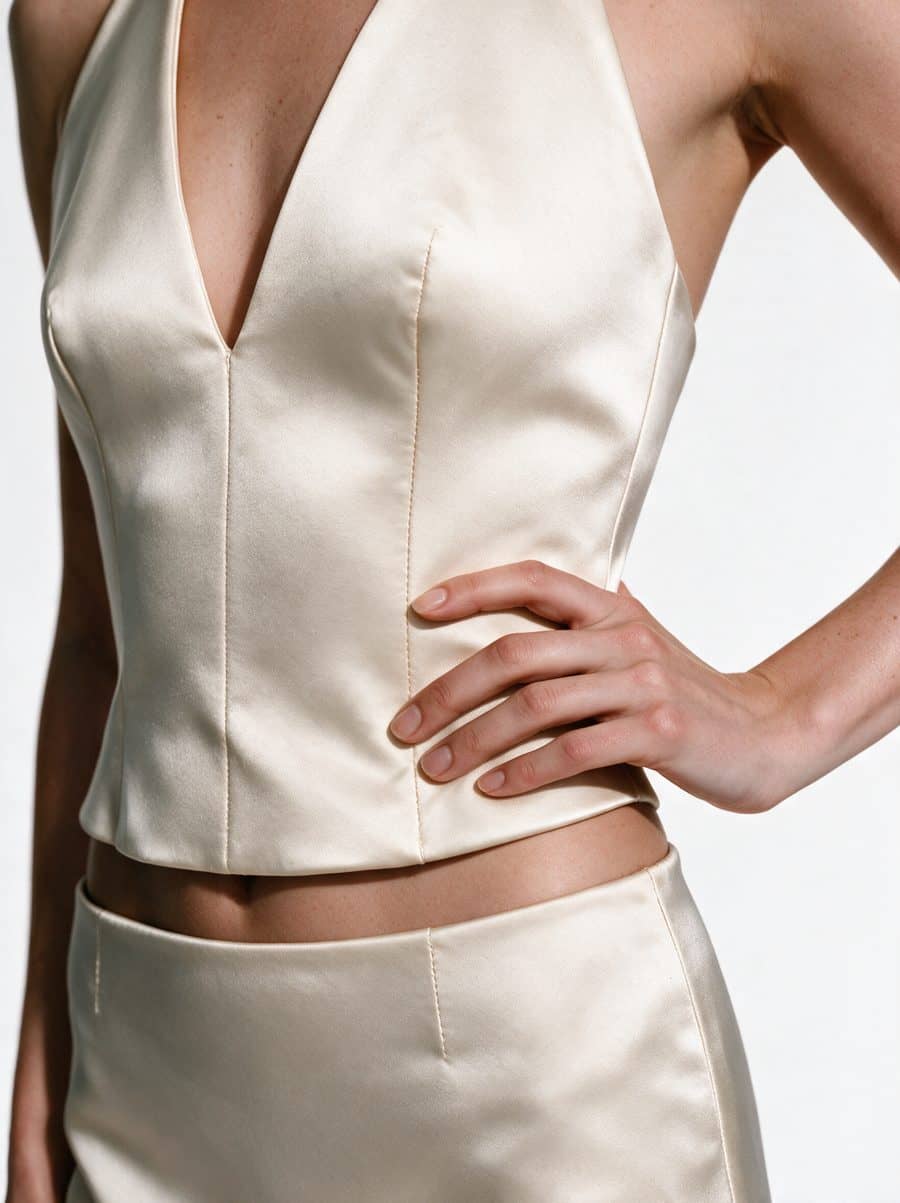
7. Bodice detail
What it does. Shows construction: the seams and topstitching that shape the bodice, and the waistband of the skirt.
What we check. Seam lines sit where they are on the real garment and run continuously. Stitching matches in color. The hand on the hip is anatomically right.
Set two: belted cropped trench
Also from our portfolio. This set mixes four on-model frames with two flat-lay frames and a fabric macro:
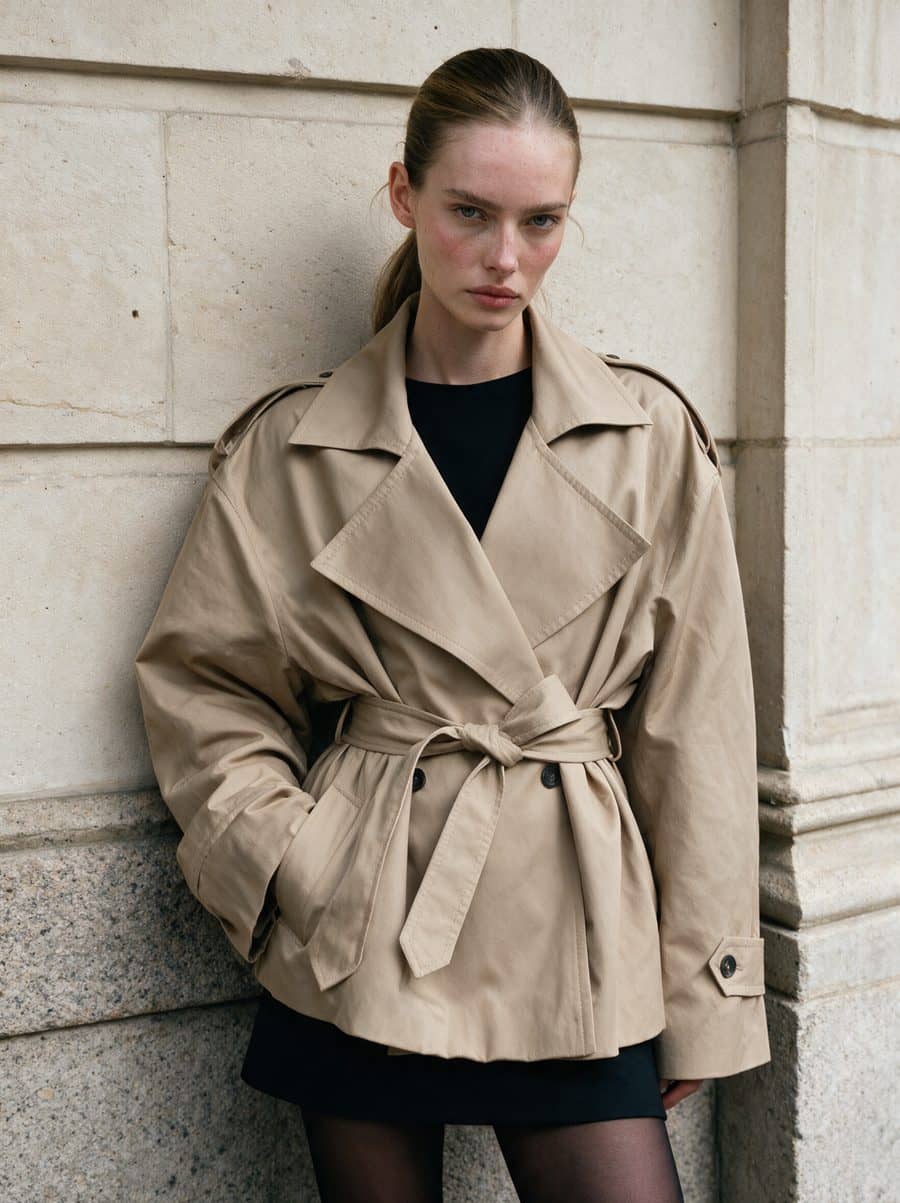
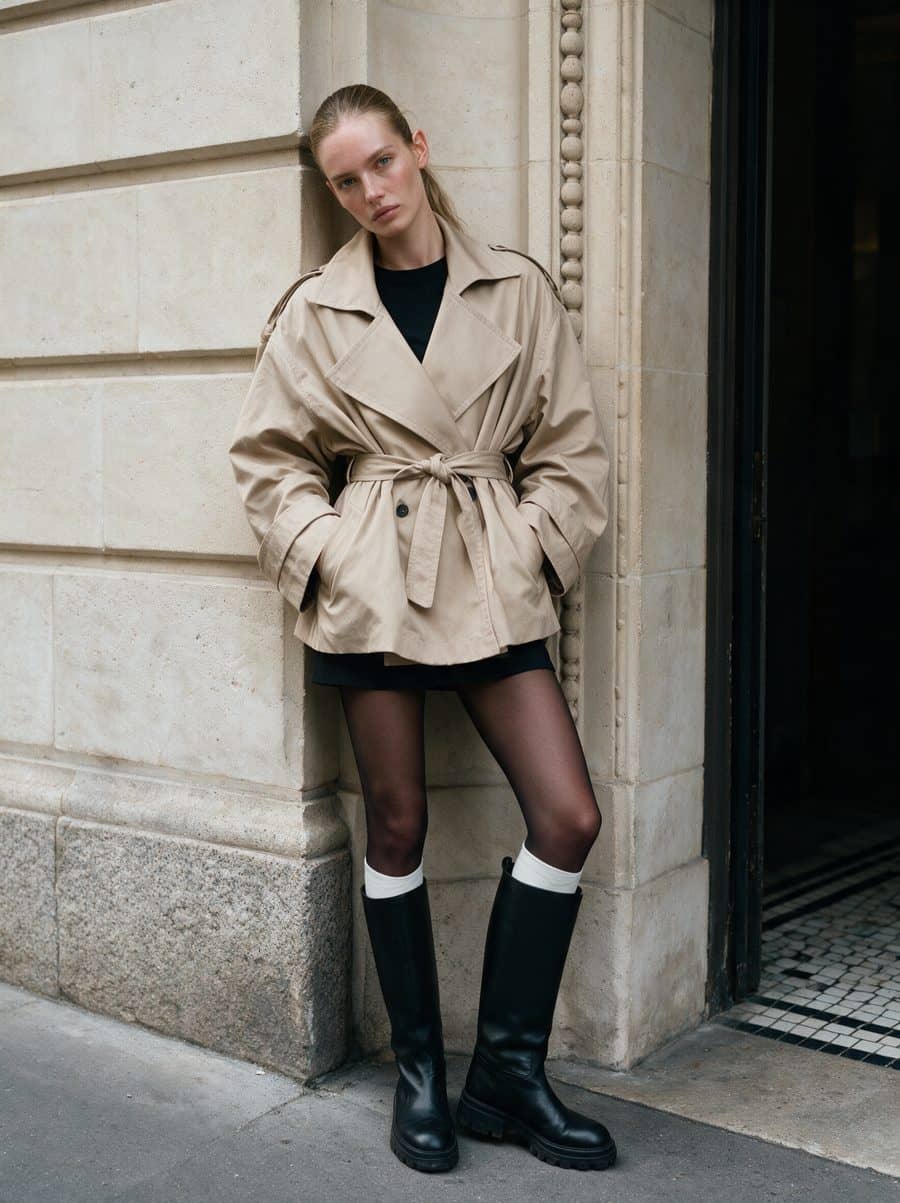
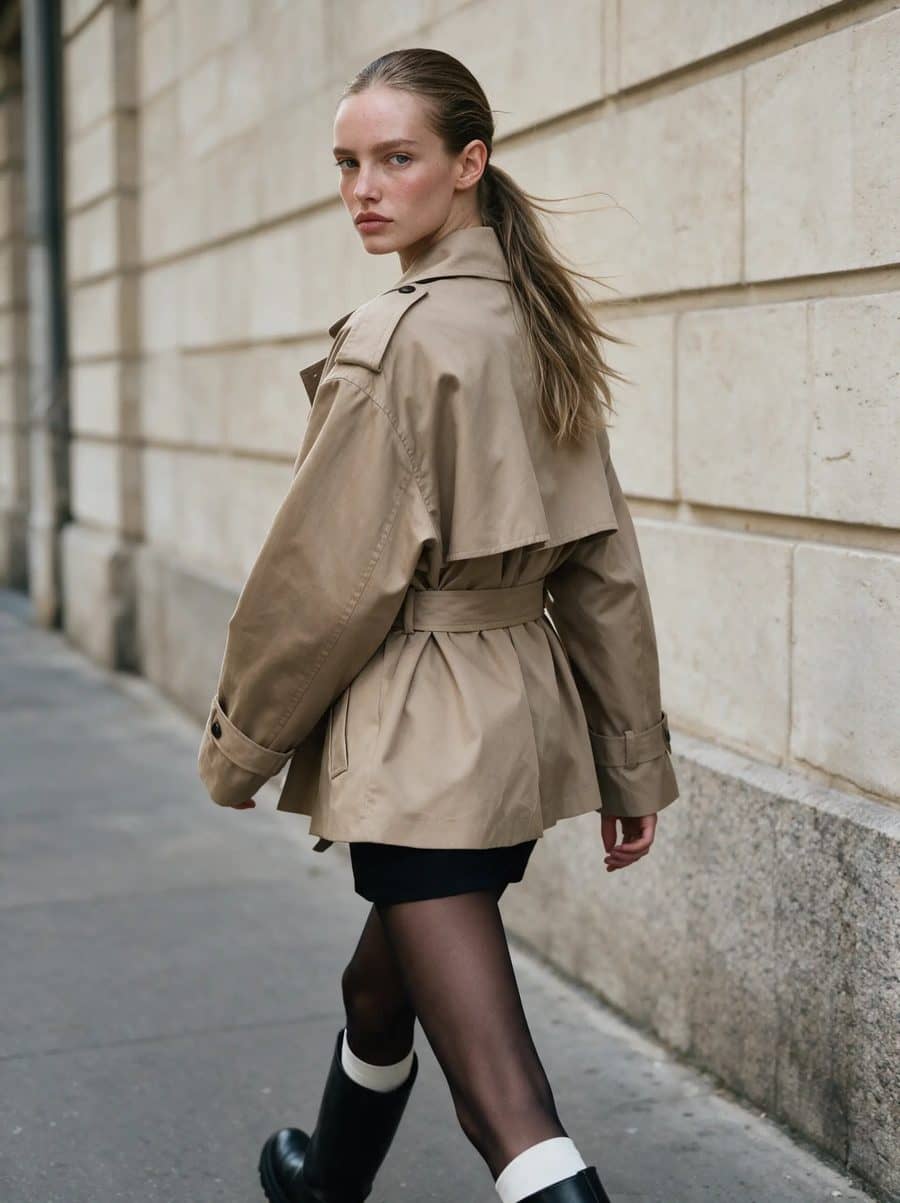
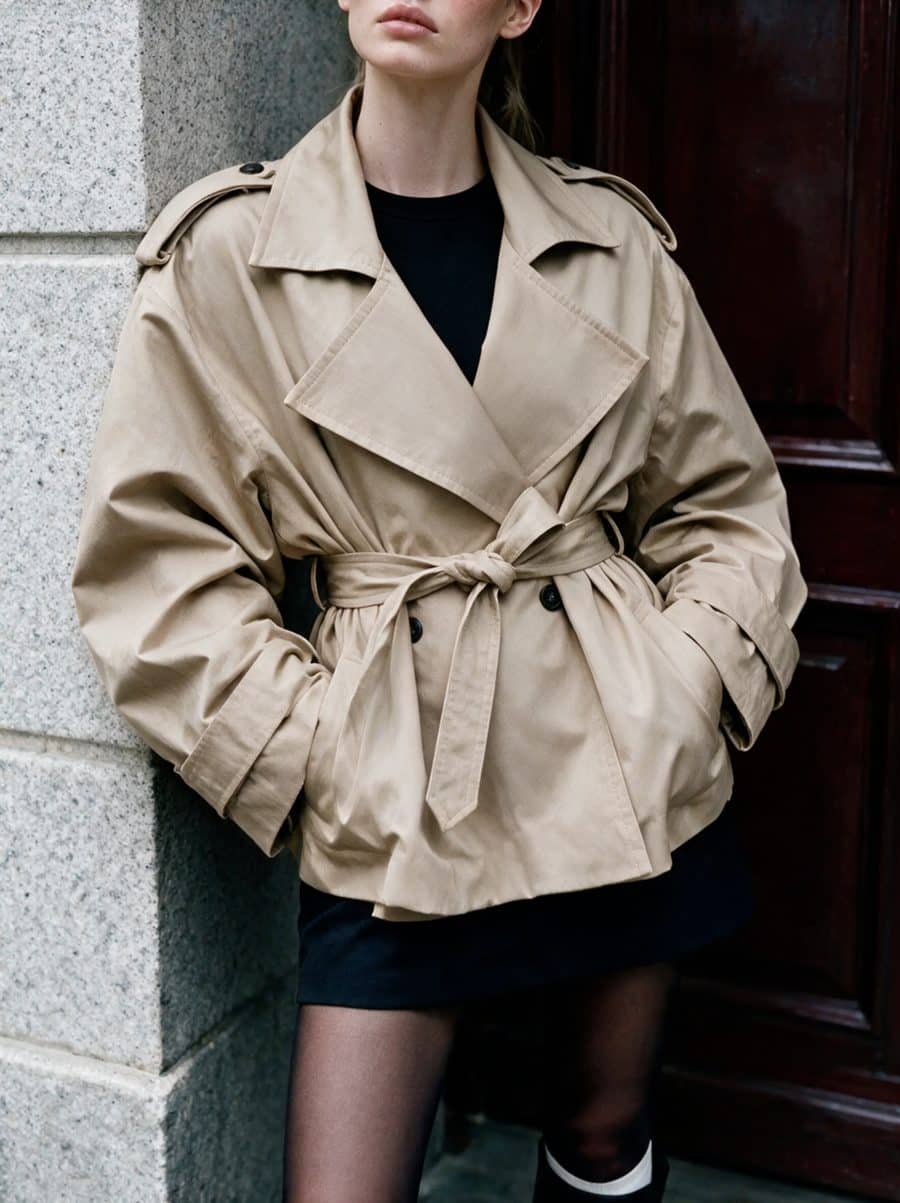
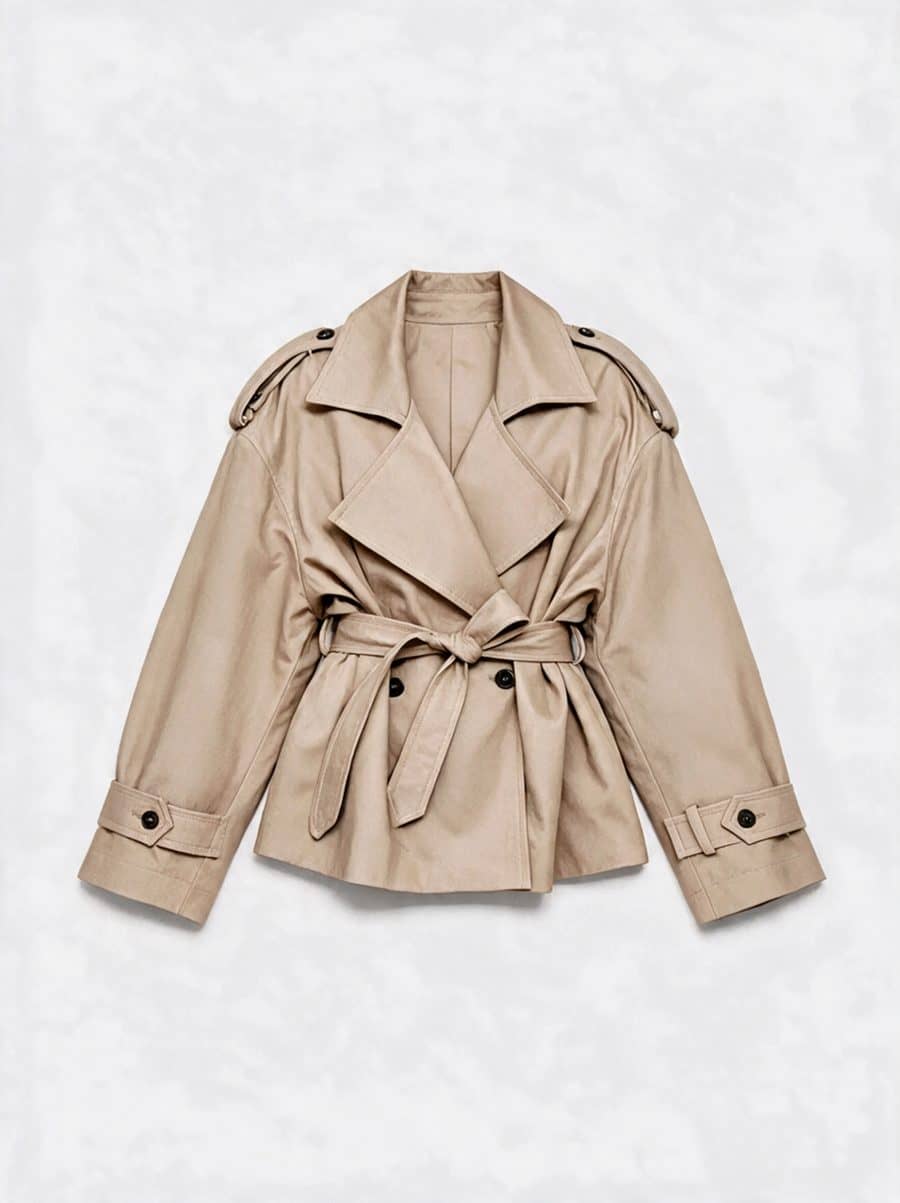
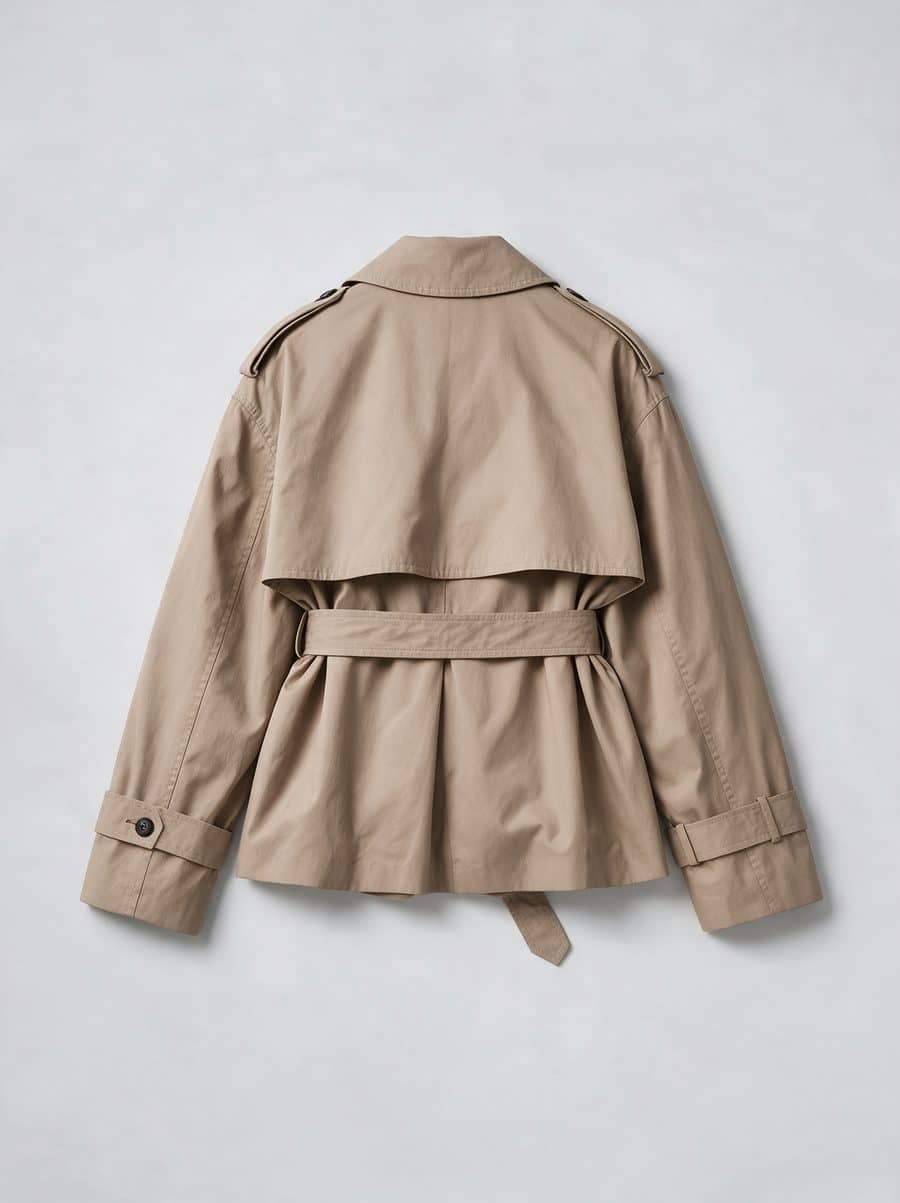
On-model frames show fit and styling. A flat lay shows the whole garment with nothing hidden by a pose or an arm: sleeve length, cuff straps, epaulettes and the flap across the back. Amazon's clothing guide recommends the same idea for products shown on a model: add an off-figure image as one of the alternates.
- Cover. The model leans on a stone wall, belt tied. We check the belt knot, the button placement and the beige of the twill. Leaning isn't allowed in an Amazon main image, so this is a cover for a brand site and social.
- Full length. The whole look: the cropped trench over a short black skirt, sheer tights and boots. We check where the jacket's hem lands on the body and the volume of the sleeves against the real garment.
- Back. Mid-stride, looking over the shoulder: the back flap, the belt through its loops, the cuff straps. We check that the back construction matches the source.
- Belt and lapels. A tighter crop on the lapels, epaulettes and belt knot. We check the collar and lapel shape and the epaulette buttons.
- Flat lay. The front, belted, sleeves out, cuff straps visible. We check symmetry, true color and that the whole garment is in frame.
- Back flat lay. The back with its flap, belt and cuff straps. We check that it matches the on-model back frame.
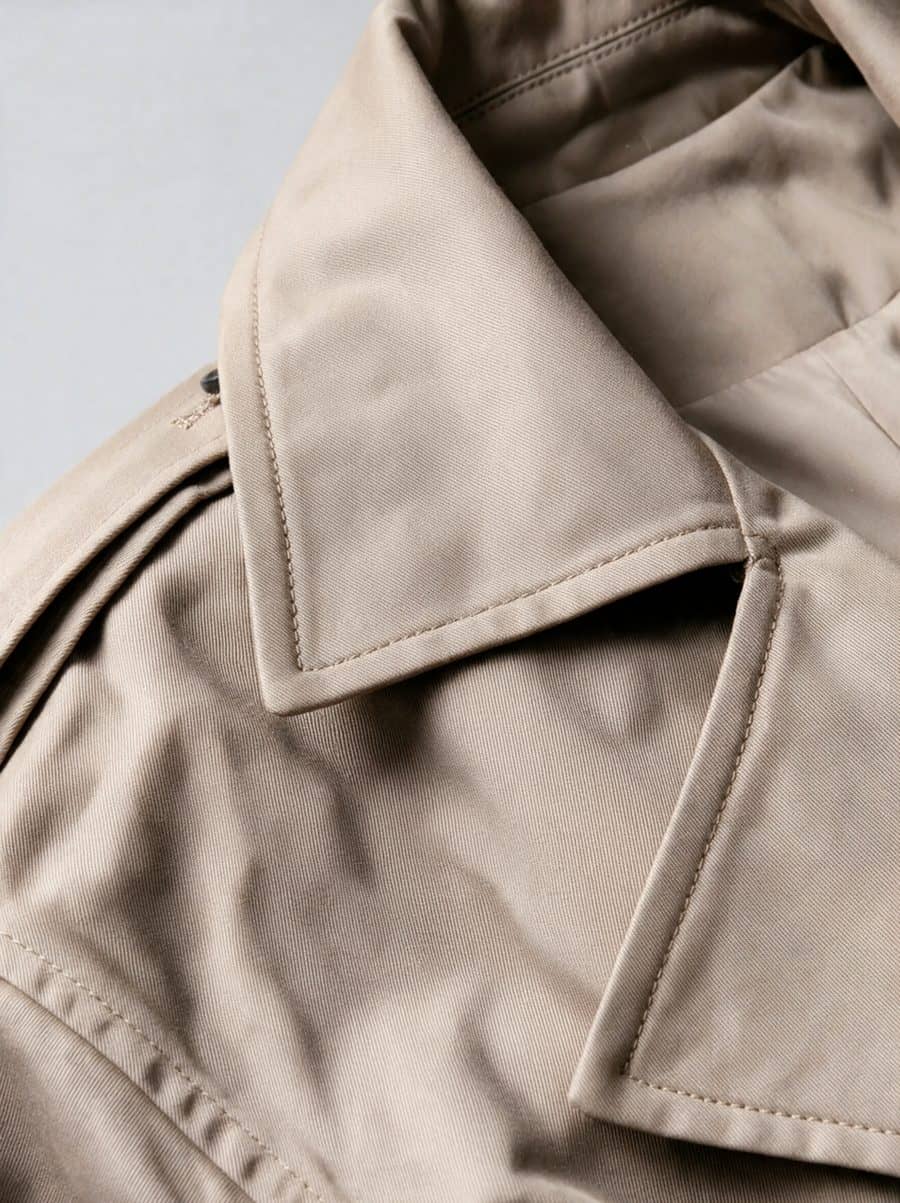
- Collar macro. The twill weave and topstitching at the collar. We check weave texture, stitch spacing and color.
How the seven frames map to marketplace slots
| Frame | Amazon | Shopify | Etsy |
|---|---|---|---|
| Cover | Main image only if it meets the main-image rules (standing model, pure white, shoes, no props); otherwise an alternate | Featured image, in the same aspect ratio as your other products | First photo, cropped landscape or square for thumbnails |
| Full length | Main image when the cover can't be: a standing model on pure white, cropped to Amazon's guide | Gallery, near the front | Gallery |
| Back | Alternate; Amazon asks for a back shot whenever possible | Gallery | Gallery |
| Lifestyle | Alternate; locations and props are allowed outside the main | Gallery | Gallery |
| Movement | Alternate | Gallery | Gallery |
| Details | Alternates | Gallery | Gallery |
A few platform facts behind the table, as of October 2026:
- Amazon allows a main image plus up to eight alternates, so seven frames fit with room to spare. Images that show a photorealistic AI-generated person, like every on-model frame in these sets, need a metadata tag before upload. All the rules are in our guide to Amazon clothing image requirements.
- Shopify allows up to 250 media per product and one assigned image for each variant, so each colorway gets its own cover. See our Shopify product image size guide.
- Etsy allows up to 20 photos per listing and recommends a landscape or square first photo, because thumbnails are cropped.
What every frame goes through
Every image is checked by a person against your garment before delivery:
- Fit and length: where the hem, sleeve and waist land on the body.
- Drape: heavy fabrics hang heavy, satin catches light, knits stretch.
- Color: matched to your product.
- Print and logo: placement, scale, spelling and symmetry.
- Construction: seams, buttons, zippers, pockets, closures.
- Hands, pose and skin: natural and anatomically right.
- Main-image rules: background, framing and crop for each marketplace.
What you get
A photoshoot is 7 images of one product: studio images on white or your brand's backdrop, lifestyle images on the street or on location, or a mix we agree with you. On a retainer, it's made on your brand model and kept consistent across your catalog; pilots use a model from our roster. The first batch is ready within 10 business days, every image is checked against our acceptance checklist, and you get two free revision rounds within 10 days of delivery, files for Amazon, Shopify, Etsy and social, and an exclusive, perpetual license once the order is paid in full.
Studio images on a model start from $95 each, and every project is quoted individually. Before the full batch, you approve the direction on 2–4 images. More on on-model clothing photography.
Pick one product you've never shot on a model. On a call we'll walk through what its seven frames would show.