What Amazon asks of a clothing main image
The main image is the one shoppers see in search results, and Amazon is strict about it. Its image guidelines for clothing (US) set these rules for clothing in adult sizes:
- On a model. Main images "must be photographed on a model". Amazon's product image guide adds that the model "must be standing, not sitting, kneeling, leaning, or lying down."
- Pure white background: "hex #FFFFFF or RGB 255-255-255".
- The whole product, from the front: a frontal view that "shows the product completely, without any part clipped".
- Filling the frame: a minimum aspect ratio "close to 3:4 (width/height)" and "85% of the total image area occupied".
- Nothing extra: no visible mannequin, hanger or holder; no folded product, packaging or tags; no text, logos, watermarks, borders or inset images; no "distracting accessories (for example, large earrings, bags, or sunglasses)".
- One view, one color: no multiple views, colorways or sizes in the same image.
- No drawings: sketches and other graphical representations are prohibited, because "only photos are allowed".
For main and alternate images alike, Amazon asks for at least 1,000 pixels in height or width so zoom works, and says "the color in the image must match the product for sale." Every parent product and every color you sell needs its own main image.
Two exceptions decide what can go on a model at all. Children's and baby undergarments, leotards, swimwear and similar form-fitting items must be shown without a model. Accessories must not be photographed on a model for the main image either.
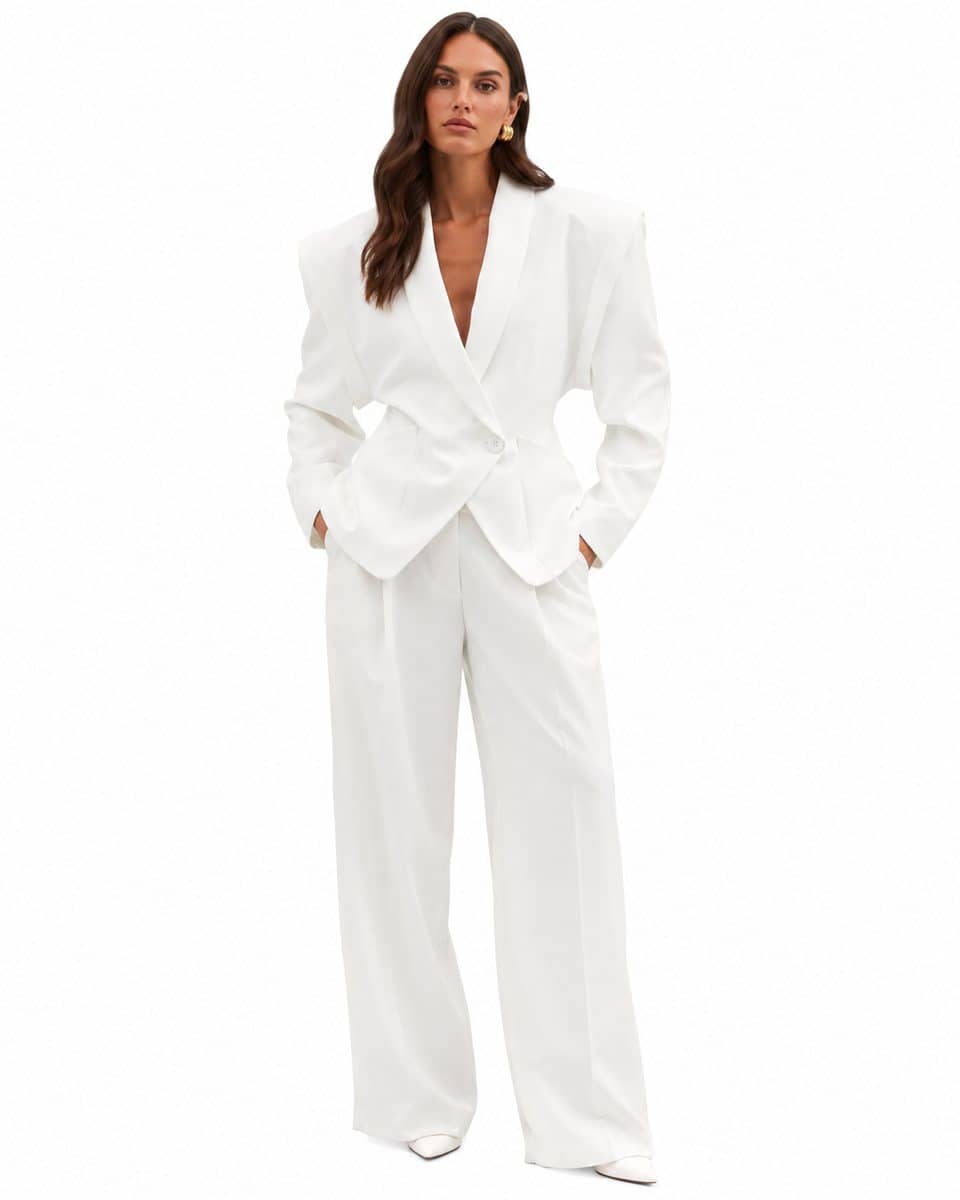
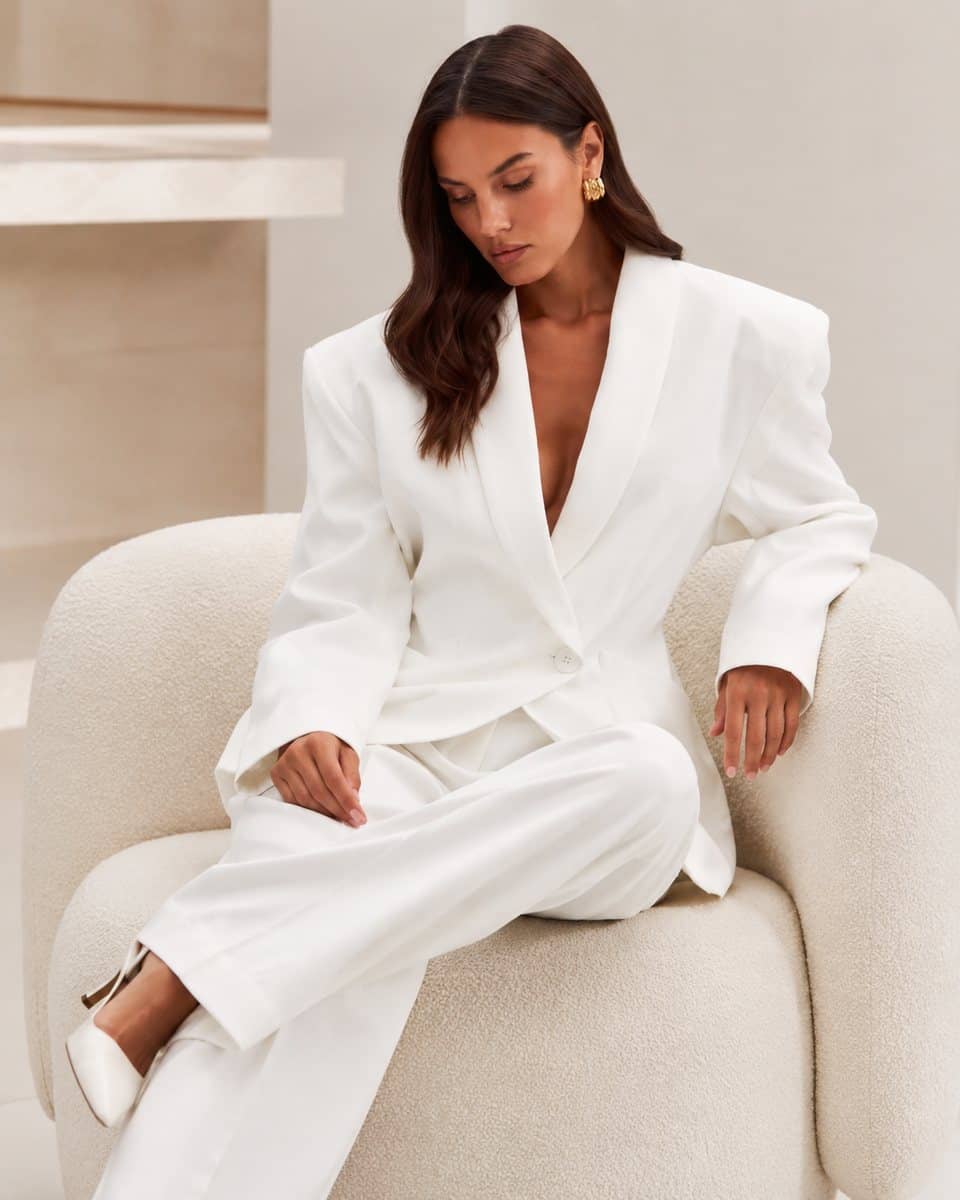
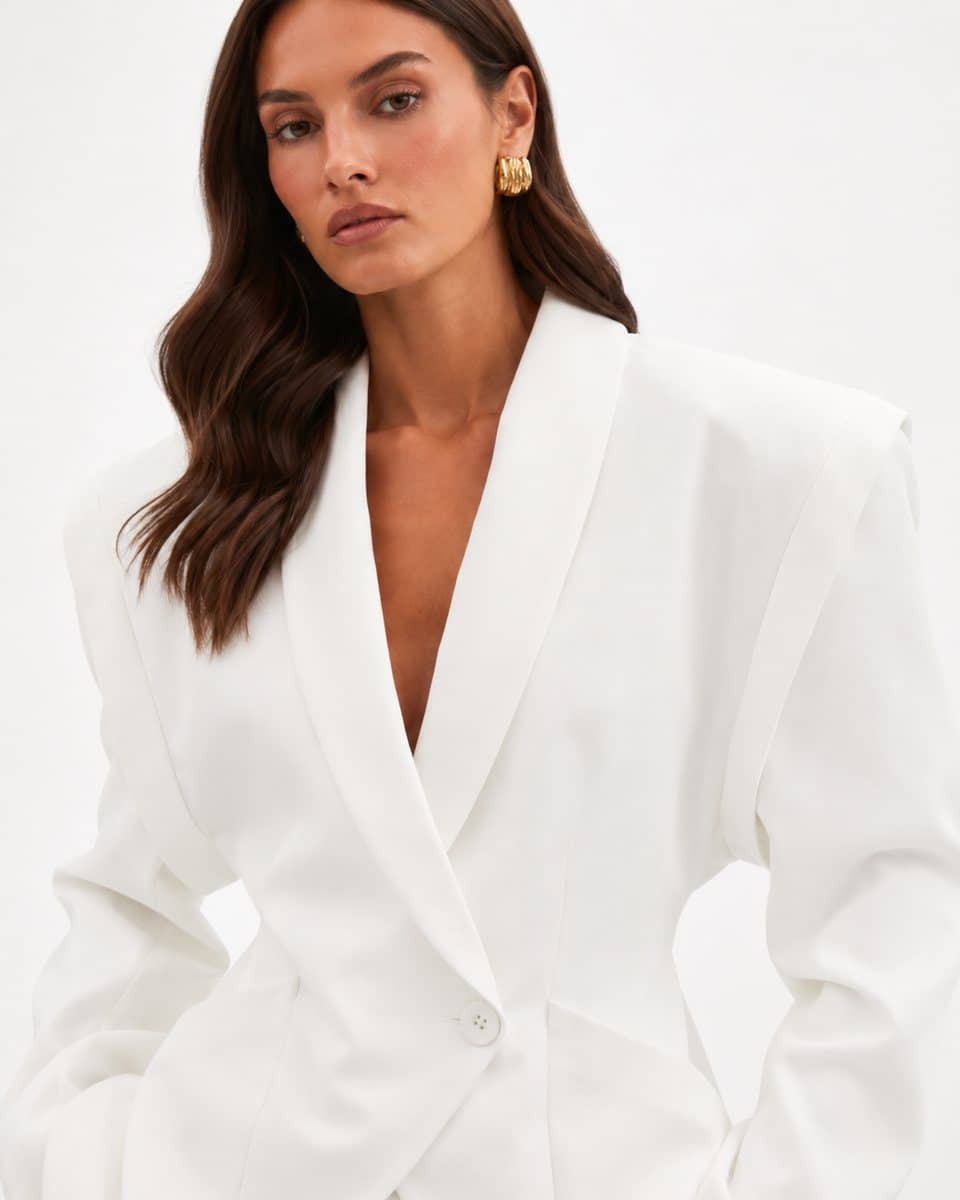
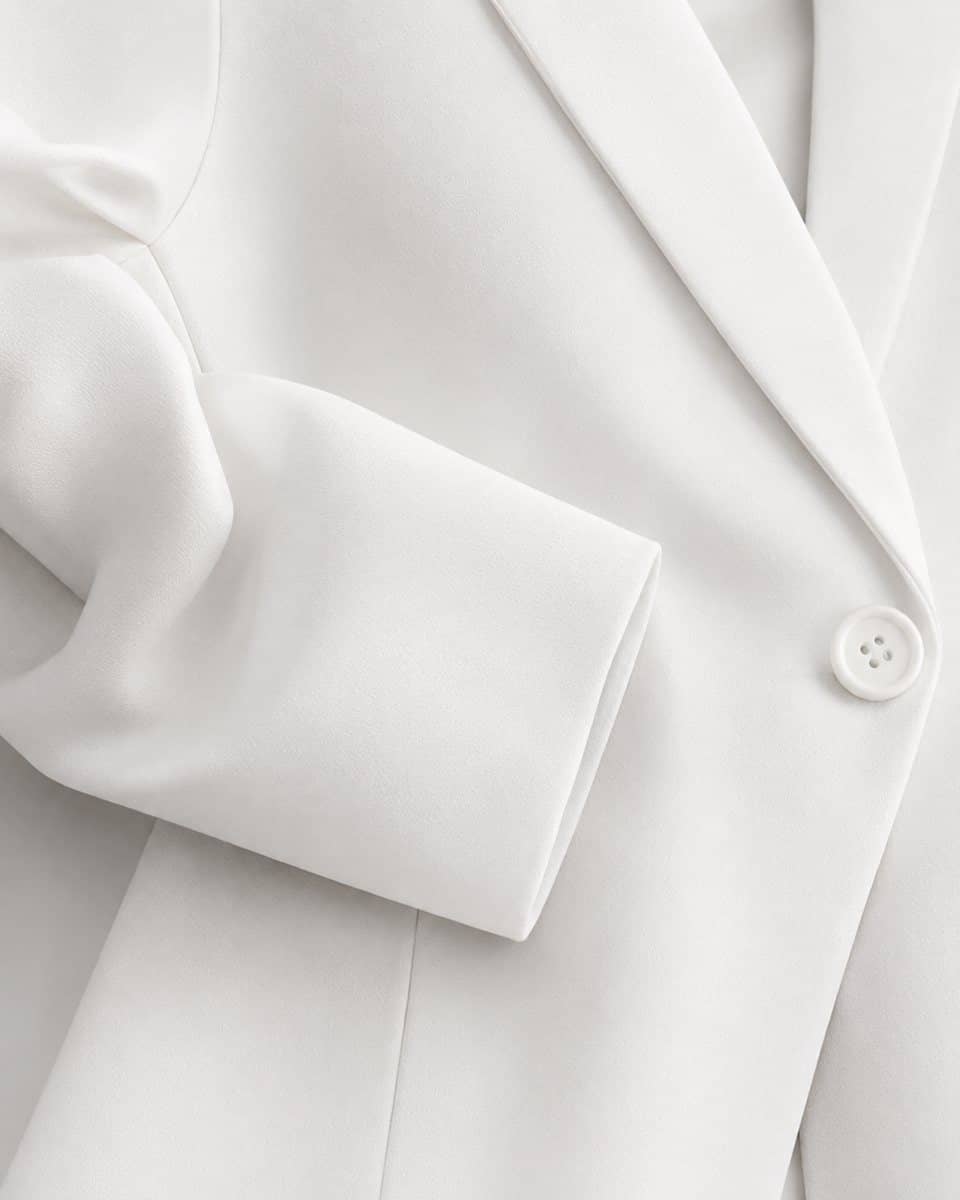
These are 4 of the 7 photos from one of our sets. Its cover has what Amazon describes for a main image: a standing model, a front view and the whole outfit in frame, on white.
AI-generated models: Amazon's disclosure tag
Amazon's product image guide addresses images like ours directly. If a product image includes a photorealistic AI-generated person, you must tag the file before uploading it: the keyword contains-synthetic-performer goes in the file's XMP dc:subject field, and Amazon then adds a disclosure where applicable. Amazon's reason, in its own words: "Some jurisdictions may require disclosure when product images contain photorealistic AI-generated people."
Amazon's tagging instructions use tools you already have. On a Mac, open the image in Preview, press Cmd+I and add the keyword in the Keywords tab. On Windows, open the file's Properties, go to Details and type it into the Tags field. For a whole folder, the same page shows a one-line exiftool command.
Every Sellora model is AI-generated, so the tag applies to every frame with a model in it. Check that it is in each file before you upload.
How the 7 photos fill an Amazon listing
The product image guide recommends "at least six additional images and one video" next to the main image, and the clothing guidelines allow up to eight alternate images for each parent or child ASIN. One Sellora photoshoot is a main image plus six alternates:
| Amazon slot | Frame from the set | What it shows the shopper |
|---|---|---|
| MAIN | Cover | The search result: on a model, on white, from the front |
| PT01 | Full length | Fit and length on the body |
| PT02 | Back | The back view, which Amazon's style guide asks for "whenever it's possible" |
| PT03 | Lifestyle | How to wear it; alternate images may show a setting and props |
| PT04 | Movement | Drape, and how the fabric falls in motion |
| PT05, PT06 | Two details | Fabric, print, closures or labels up close |
| One more alternate | Your own flat lay or ghost shot | The style guide recommends an off-figure alternate for products shown on a model |
Amazon's Clothing & Accessories style guide (dated March 2022) is also where the 5-to-7-image recommendation and the advice to keep one crop shape across the listing come from: if the main image is rectangular, the alternates should be too.
Colorways: one main image per color
Amazon wants a main image for every color you sell, each showing that color only. Photographing every colorway on a model is where shoot costs pile up. With Sellora you send photos of one colorway, and we produce the rest on the same model, in the same pose and light, so switching swatches changes the color and nothing else.
A+ content, briefly
A+ content is the section further down the product page where brands add images, text and comparison charts. According to Amazon, you need a Professional selling account and a Brand Representative or Reseller role for a brand enrolled in Brand Registry (or generic products in your catalog), and it is free for eligible sellers. Premium A+ adds larger images, video and carousels.
The lifestyle, movement and detail frames from a set suit A+ modules well. Once the order is paid in full, you get an exclusive, perpetual license to every image, so you can reuse them there, in ads and on your own store without paying again.
What Amazon keeps off a model
- Children's undergarments, leotards and swimwear. Amazon prohibits showing them on a model, so they are not a fit for on-model photos on Amazon. Other kids' clothing is one of the categories where AI on-model photography does well.
- Accessories. The main image shows them flat, without a model. Bags, hats and scarves can still go on a model in the alternate images.
- Our own limits. Highly reflective fine jewelry, complex layered outfits and extreme close-ups of fine lace don't render reliably. We say so before we quote.
Price and how it works
Studio images on a model start from $95 each, with no minimum order, and every project is quoted individually: your proposal shows the total. Most brands start with a pilot of 5 products × 7 images, credited in full to the first month of a retainer.
- Send photos, not products. Your existing flat lays, ghost shots or packshots (ideally 2,000 px or more), your size chart and 1–3 reference images. If your stock is already in an Amazon warehouse, it stays there.
- We set your model. Pilots use a model from our roster. On a retainer, we cast your own brand model, matched to your buyer, and keep her for every product after.
- A person checks every frame for fit and length, drape, color, print and logo, construction, hands and pose, and Amazon's main-image rules, using our Amazon compliance checklist.
- You approve the direction, then get the full set. You approve 2–4 images first. The first batch is ready within 10 business days, sized for Amazon. Anything that fails the checklist is remade for free, and you get two free revision rounds within 10 days of delivery.
How this compares with a studio shoot is covered in on-model clothing photography and on-model photography price per image.
Selling apparel on Amazon? Send us a brief with one product in mind, and we'll reply within one business day with a proposal for its main image and six alternates. Prefer to talk? Book a call.