The short answer
Flat lays are the cheapest and fastest clothing photos but show no fit; ghost mannequin shots add a 3D shape for more money and editing time; on-model photos show fit, length and drape, and cost the most when you book a live model. Most clothing brands get the best result from a combination: flat lays or ghost mannequin shots as clean source images and detail frames, plus on-model photos for the main image and fit, which AI can now make from those same source photos.
The three formats compared
| Flat lay | Ghost mannequin | On-model | |
|---|---|---|---|
| What it is | The garment laid flat and shot from above | Shot on a mannequin; the mannequin is removed in editing | Worn by a person: a live model or an AI model |
| Cost level | Lowest | Middle: styling on a mannequin plus compositing | Highest with a live model, because model fees come on top; AI replaces them with a per-image price |
| What the buyer sees | Outline, color, print and details, all at once | The garment's 3D shape, neckline and inside back | Fit, length, drape and scale on a body, plus styling |
| Is fit visible? | No | Partly: shape, but no body | Yes |
| Speed | Fastest: one setup, a simple edit | Slower: every image is composited | Slowest live (casting, booking, styling); with AI from existing photos, seconds in a self-serve tool or within days done for you |
How each format works
Flat lay. The garment is steamed, laid on a surface and shot from directly above, often shaped with pins and tissue so it looks full rather than deflated. It shows the whole outline at once (length, sleeves, trims) and records color and print without a body bending them. It can't show how the piece fits or moves. Flat lays work well for t-shirts, sets, kidswear and accessories, and they make excellent detail and alternate images.
Ghost mannequin. The garment is shot on a mannequin, usually with a second shot of the inside neckline or back, and an editor combines the images so the mannequin disappears. Collars stand and shoulders fill out, with no body to distract. It still doesn't show fit, length on a person or how fabric moves.
On-model. A person wears the garment: a live model in a studio or on location, or an AI model generated from your product photos. It's the only format that answers "how will this look on me": where the hem lands, how the fabric hangs, how it moves. With a live model it's also the most expensive and slowest to organize, with casting, hair and makeup, styling, studio time and usage rights. AI removes the booking, but the garment is generated rather than photographed, so every frame has to be checked against the real product. We cover the eight things to check in AI models vs real models.
One photoshoot, both formats
The set below is one photoshoot of a belted cropped trench, as delivered: four on-model frames, two flat lays and a collar macro.
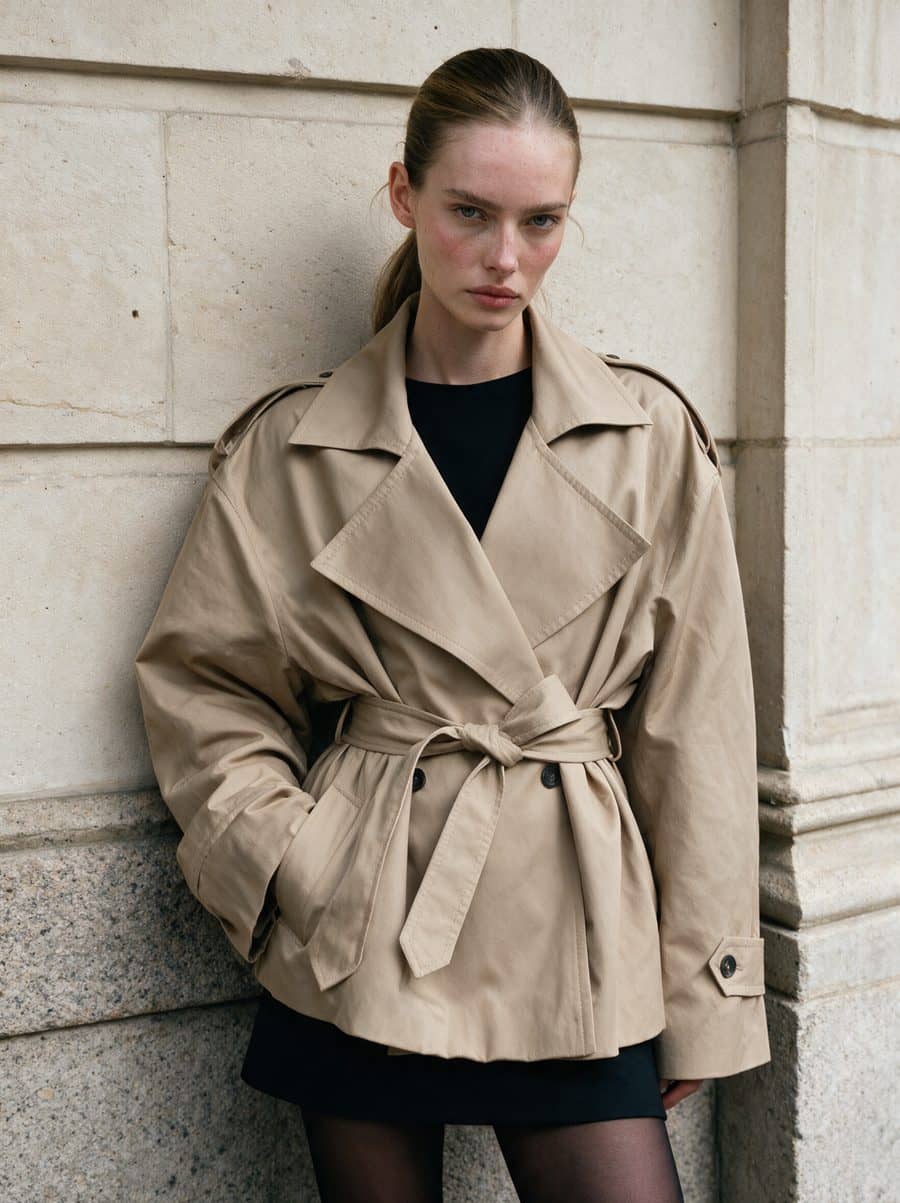
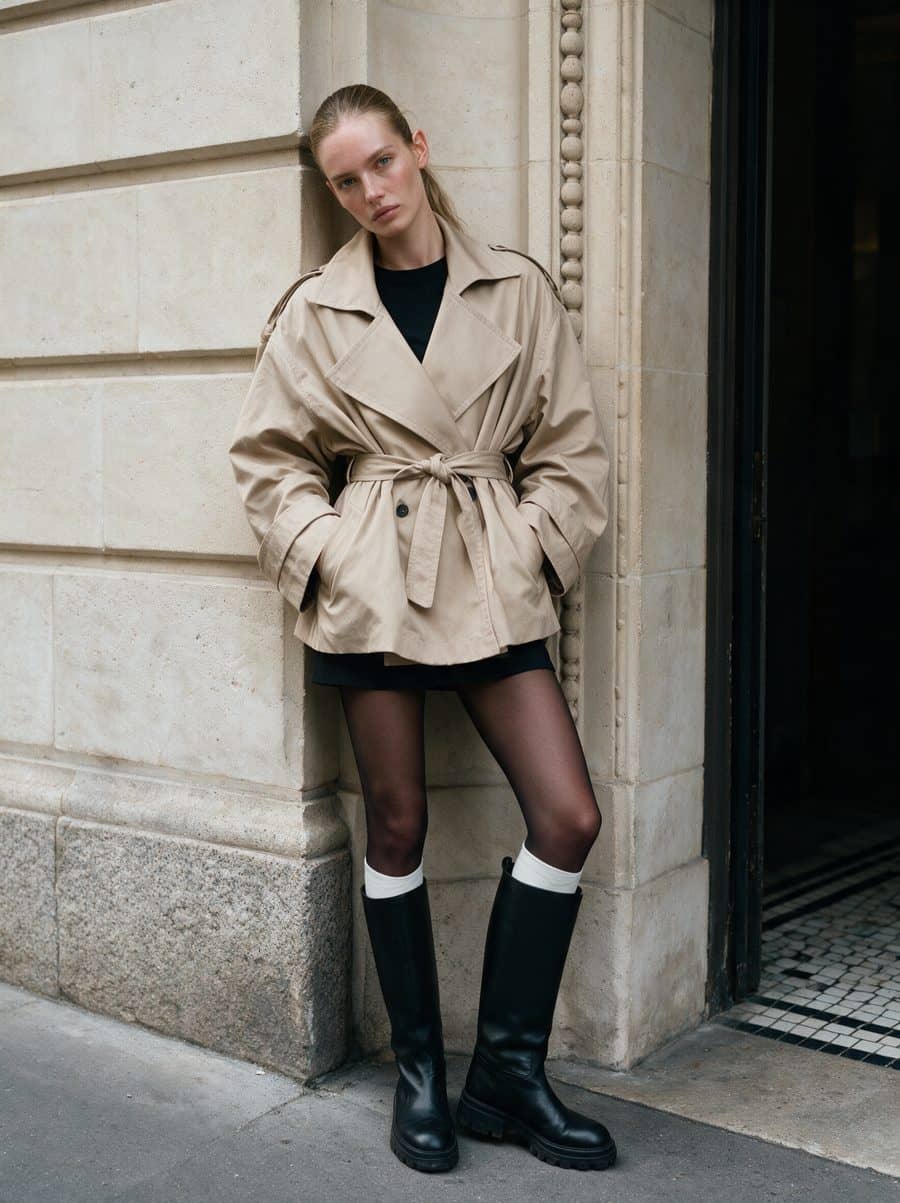
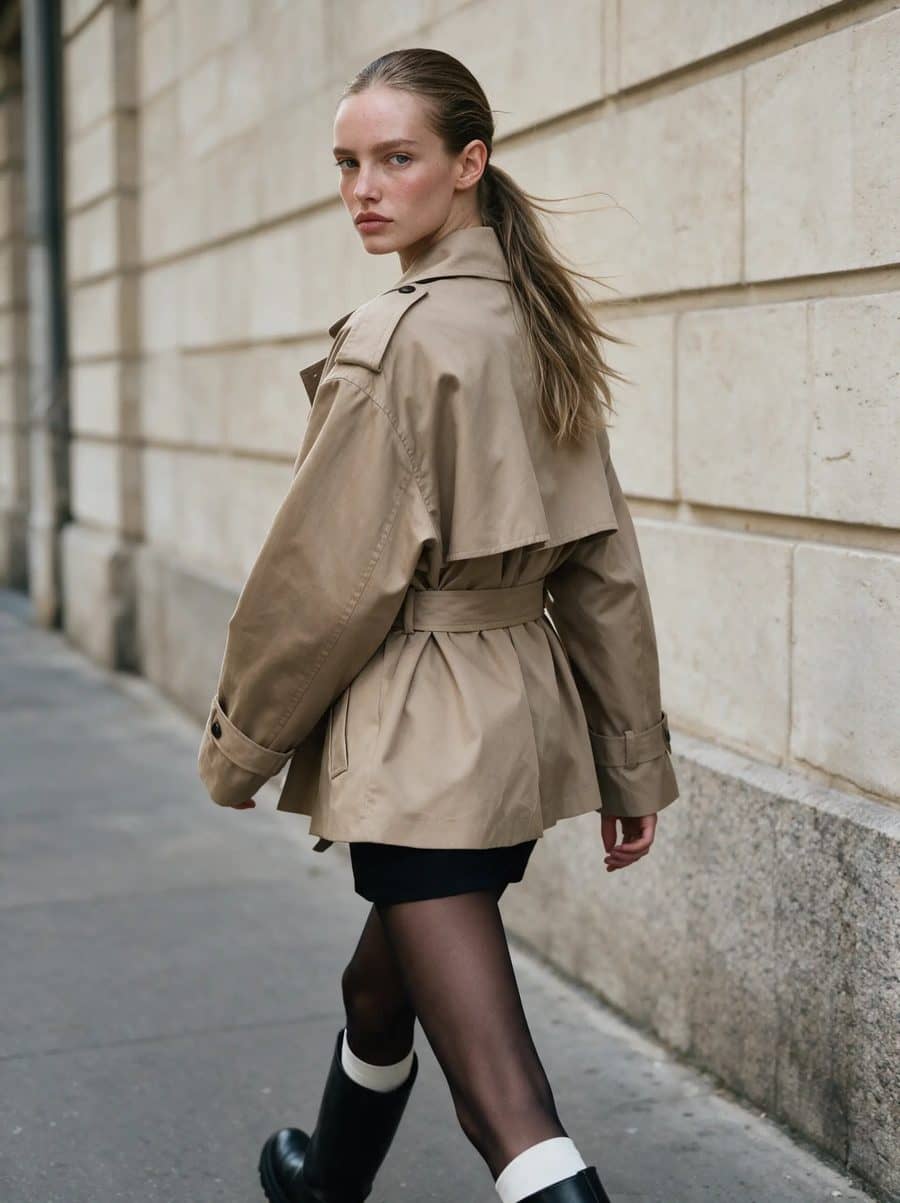
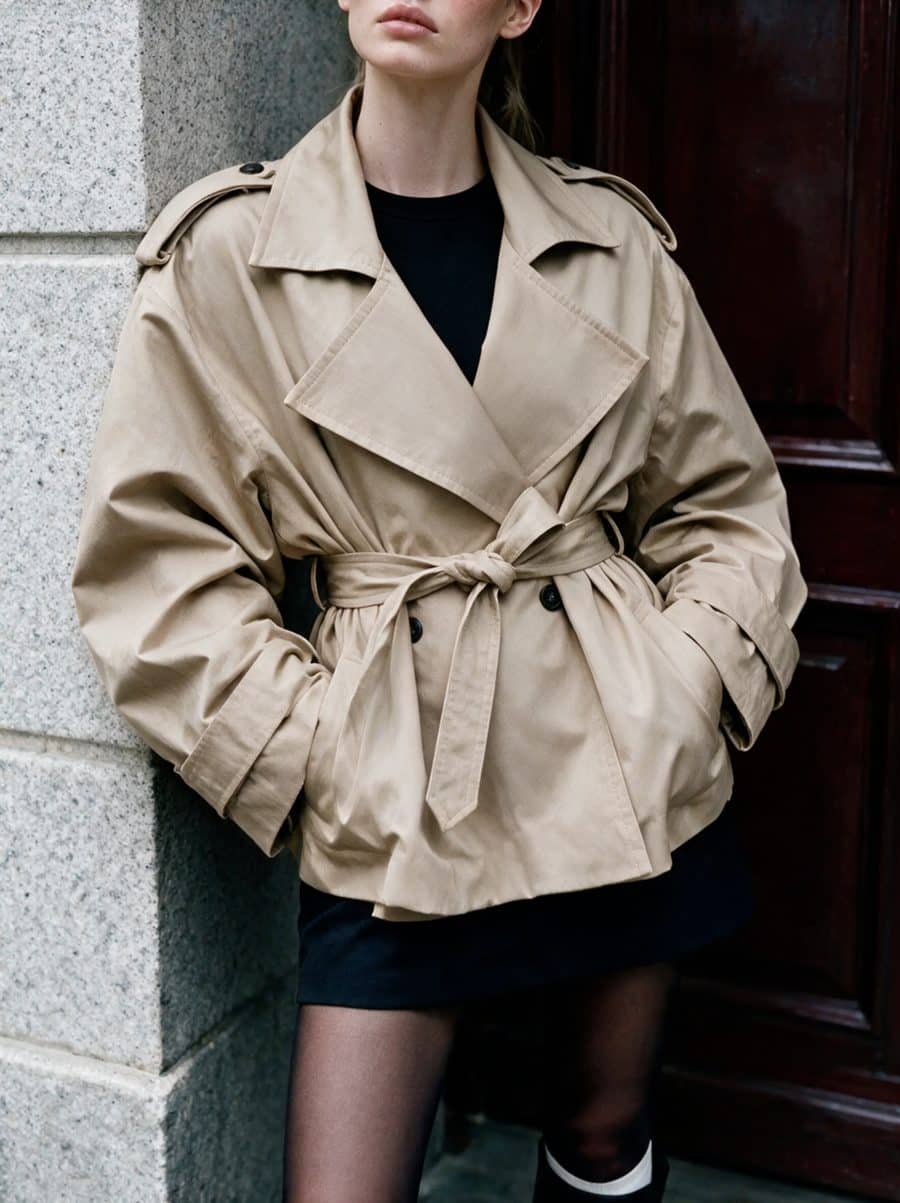
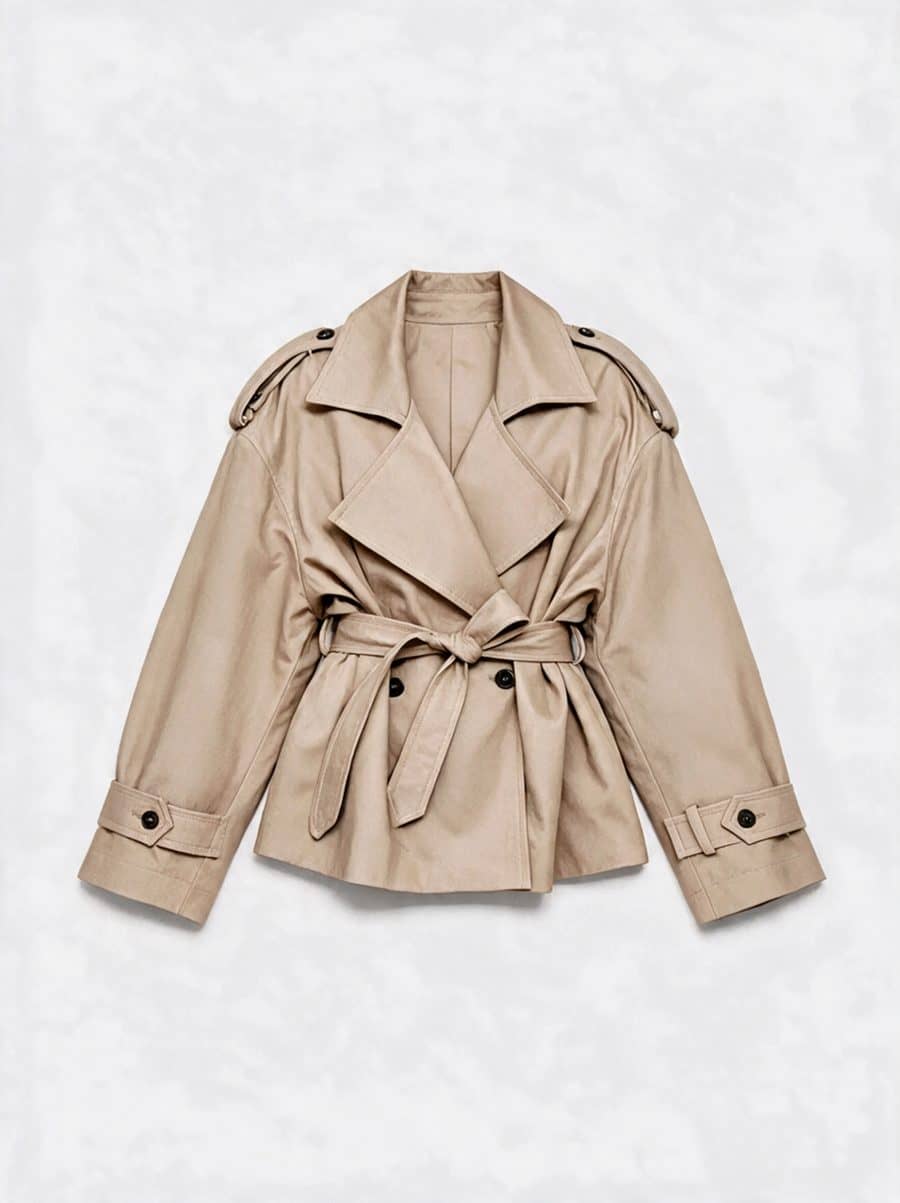
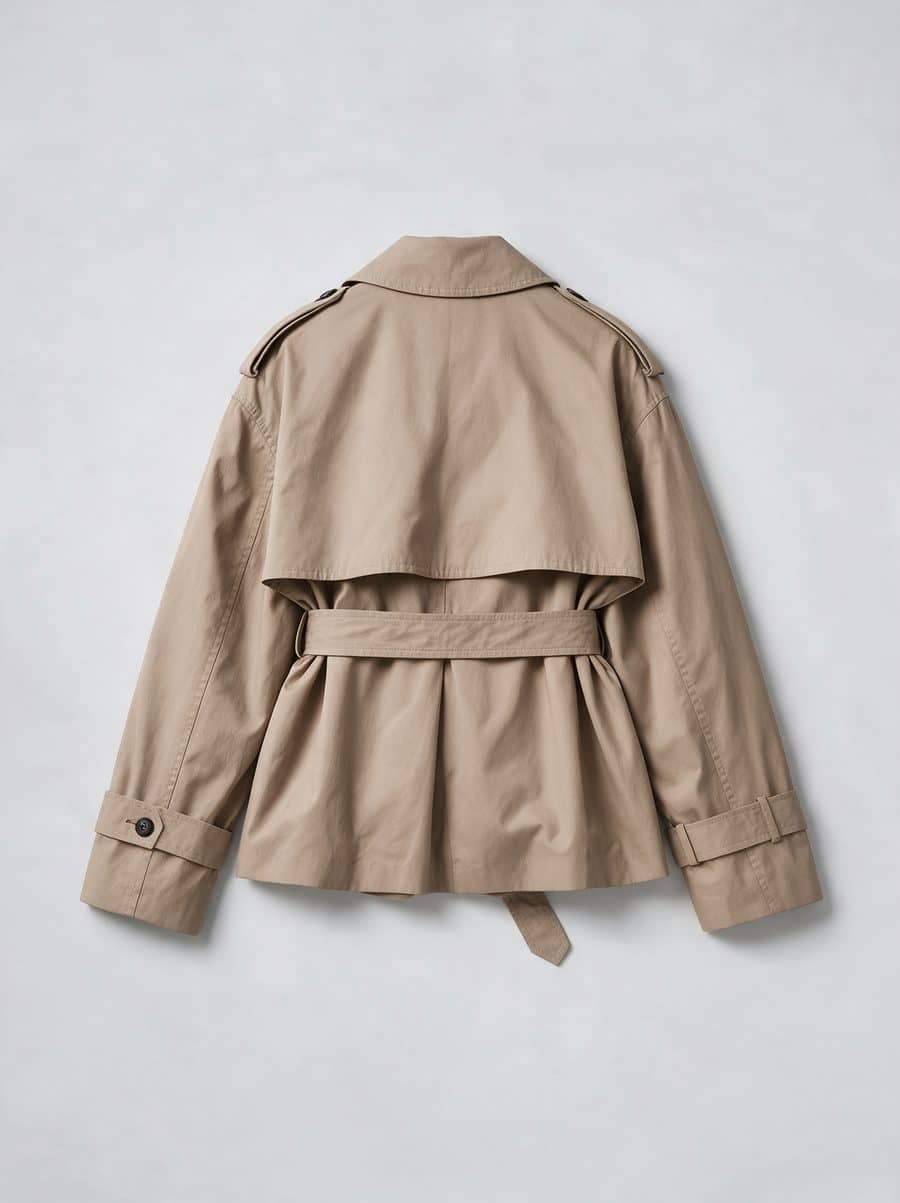
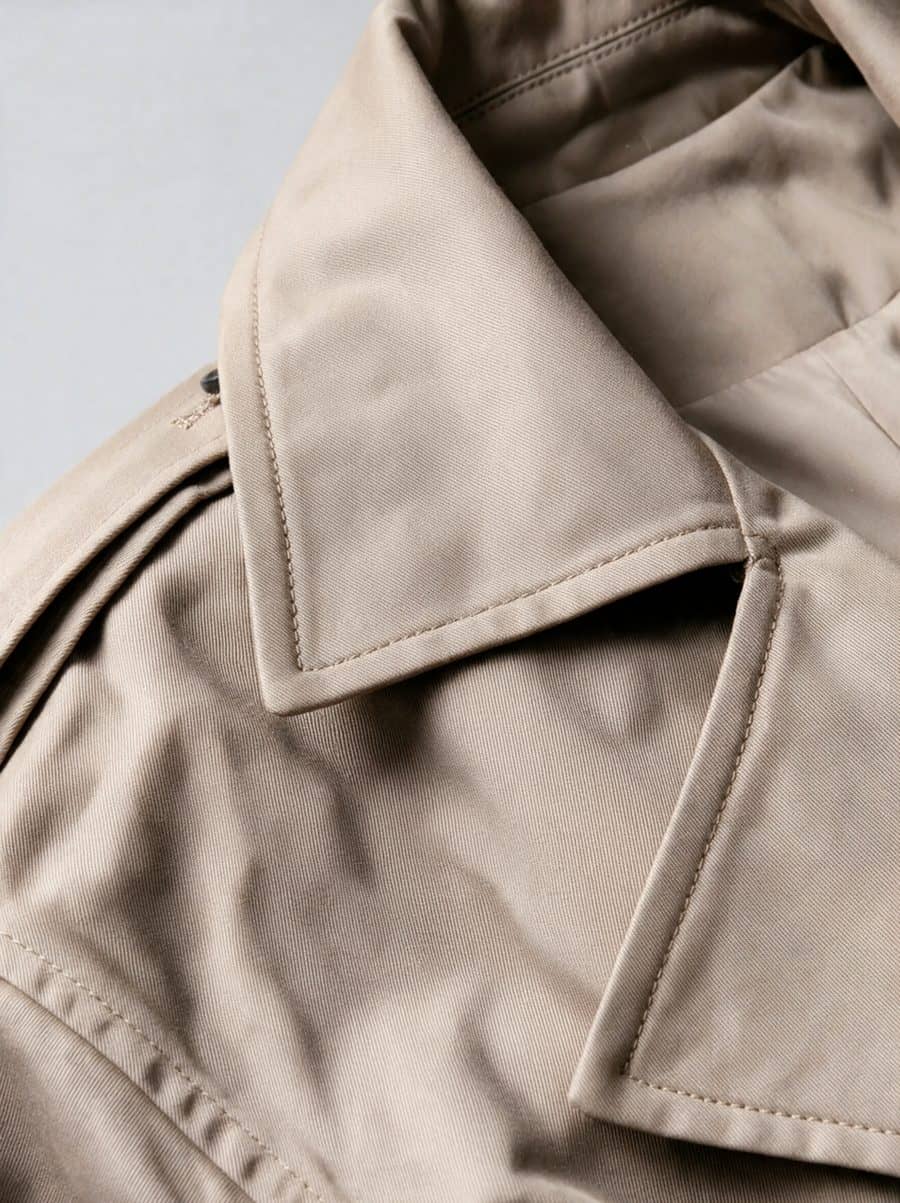
Look at what each format tells a buyer. The flat lays show the whole coat at once: the epaulettes, the cuff tabs, the belt and the storm flap across the back. The on-model frames answer what the flat lays can't: where the cropped hem lands on a body, how much the belt gathers at the waist, and how the dropped shoulders and wide sleeves sit on an arm. Together they leave very little to guess.
Which format for which category
| Category | Lead with | Add | Watch for |
|---|---|---|---|
| Dresses | On-model, full length | Ghost mannequin or flat lay for details | Hem length and waist placement; a flat lay flattens the skirt |
| Knitwear | On-model | Flat lay or a macro for stitch and texture | Loose knits look boxy on a mannequin; texture blurs in small images |
| Denim | On-model, front and back | Flat lay for the wash, pockets and hardware | Rise, leg shape and inseam length |
| Activewear | On-model, including a movement frame | Flat lay for sets and details | Stretch, compression and where seams sit on the body |
| Swimwear | On-model for adult styles | Ghost mannequin or flat lay for details and linings | Coverage and fit; kids' swimwear is shot flat |
| Outerwear | On-model | Ghost mannequin or flat lay for linings, pockets and belts | Hem length, how a belt gathers, how the shoulders sit |
Dresses. Buyers want to know where the hem lands and how the waist sits, and only an on-model photo answers that. A flat lay flattens a skirt's volume. Ghost mannequin works for structured dresses, but bias-cut and flowing ones need a body to hang from.
Knitwear. Knits stretch and hang under their own weight, so a sweater looks different on a body than laid flat. Show it on-model for length and drape, and add a flat lay or macro for the stitch pattern. Ghost mannequin suits structured knits, such as a fitted cardigan, better than slouchy ones.
Denim. Fit is the whole decision: rise, leg shape and length. Jeans need on-model front and back frames. A flat lay is still useful for the wash, the back pockets and the hardware.
Activewear. Stretch and compression only show on a body, and a movement frame shows whether a top rides up or a waistband holds. Flat lays help with matching sets and details such as pockets and trims.
Swimwear. Coverage and fit are the questions, so adult swimwear sells on-model, with ghost mannequin or flat lay frames for details and linings. Kids' swimwear is different: Amazon requires it to be shown off-figure, laid flat, in every image.
Outerwear. Coats and jackets hold their shape, so ghost mannequin works well for them, and flat lays show linings, pockets and belts clearly. On-model frames still answer what a mannequin can't: where a cropped or long hem lands, how a belt gathers at the waist, and how the shoulders sit on a body. The trench set above is a good example of the two working together.
What marketplaces expect
Amazon has the most detailed rules. Its Clothing & Accessories style guide, dated March 2022, asks for:
- A main image on a pure white background (RGB 255, #FFFFFF), showing a single product with no props, text or logos.
- On the main image, a model who is standing (not sitting, kneeling, leaning or lying down) and wearing shoes, except for swimwear and sleepwear.
- A crop that fits the garment: full length for maxi dresses, jumpsuits, suits and anything that falls at or below the fingertips; upper body for tops, outerwear, short dresses and short skirts; waist down for trousers and jeans.
- Kids' and baby clothing laid flat, off-figure, on the main image. Kids' underwear and swimwear must be off-figure in every image.
- Images at least 1,000 px and no more than 3,900 px on the longest side, so zoom works.
- Five to seven images per listing, including a clear front and back. For products shot on a model, it recommends adding an off-figure image as well.
So on Amazon the formats work together: the guide's main-image crops for adult clothing show a model on white, kids' clothing is laid flat, and an off-figure frame belongs in the set either way. Check Seller Central for the current rules before you upload; our guide to Amazon clothing image requirements walks through them.
Shopify doesn't prescribe a format. Its help center says square images of 2048 × 2048 px usually display best, and that main images need one consistent aspect ratio to display at the same size. That matters most when you mix flat lays and on-model photos in one collection. More in Shopify product image size.
Etsy doesn't require a format either. Your first photo is the one shoppers see in search, so lead with your strongest frame, which for clothing is usually the on-model one.
The combination we recommend
- Keep flat lays or ghost mannequin shots as your source. They're the cheapest photos to make, they record true color, print and construction, and they double as detail and off-figure frames, which Amazon recommends anyway.
- Make on-model photos from them for the main image and fit. AI can now put the garment from a flat lay or ghost mannequin photo onto a model, without booking a shoot, and keep the same model across your catalog.
- Check every on-model frame against the source. Length, drape, color and print are where AI slips, so a person should compare each frame with the original photo.
- Book live shoots where they earn their cost: campaigns, video, and pieces AI handles poorly, such as reflective fine jewelry, complex layered outfits and extreme close-ups of fine lace.
This is the workflow Sellora is built around. Send your flat lays or ghost mannequin photos (2,000 px or larger is ideal), a size chart and 1–3 reference images, and we return a 7-image on-model set per product, checked against our acceptance checklist: the first batch within 10 business days, from $95 per image. See flat lay to on-model, ghost mannequin to on-model and on-model clothing photography.
We don't shoot flat lays or ghost mannequin photos ourselves. For those you need a studio or a small setup of your own; see how to photograph clothing for e-commerce and ghost mannequin photography.
Have a catalog of flat lays or ghost mannequin shots? Book a call and we'll go through what a photoshoot of one of your products would include.